8 of the Worst Countries For Black People to Travel

greece-racist-violence-grows

Greece

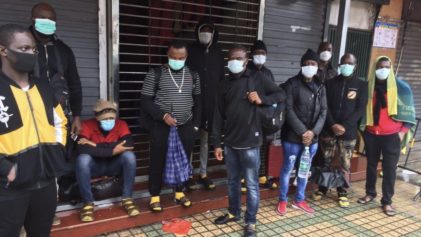
Human rights groups report that the number of racially motivated attacks have increased in Greece, as did the severity of the violence involved.  Kostis Papaioannou, head of the National Commission for Human Rights, says the 2012 figures “shows some very interesting and very worrying tendencies regarding racist violence in Greece. We have both an increase in the numbers of attacks but also – which is really worrying too – we have an escalation of the tension of this violence.”  The incidents have spiraled as Greece’s economy has worsened over the past few years.

The vast majority of attacks occurred in Athens, mainly in inner-city neighborhoods. Immigrants are often set upon by groups of men wielding metal bars, chains, brass knuckles, broken bottles, knives and wooden clubs. The victims suffer from broken bones, damage to sight and hearing and extensive bruising, reports the Racist Violence Recording Network, composed of 30 aid and human rights groups.

Meanwhile, the U.S. Embassy in Greece has warned Americans traveling to Greece to be wary of “a rise in unprovoked harassment and violent attacks against persons who, because of their complexion, are perceived as foreign migrants.”

“U.S. citizens most at risk are those of African, Asian, Hispanic or Middle Eastern descent in Athens and other major cities,” cautions the embassy in a statement first posted on its website last November.

Democracy needs journalism it can trust.

This election season, the stakes are higher than usual — and so is the pressure on newsrooms to soften their coverage, stay quiet, or just disappear. Independent reporting, the kind that answers to readers instead of advertisers or political pressure, matters more in a moment like this, not less.

For over 14 years, Atlanta Black Star has stayed independent and reader-funded. We have no corporate owner and no shareholders telling us what to cover or how to cover it. That independence is also our biggest vulnerability: nothing protects it except readers choosing to fund it directly.

Newspaper ad revenue has fallen more than 80% since 2005, and local newsrooms are closing at a rate of roughly two a week nationwide. When outlets go under in a moment like this, it's rarely the independent, reader-funded ones that get to stick around.

We know a request for support isn't why you came here. But without readers choosing to fund this work directly, the depth of reporting we can do at home and abroad shrinks along with everyone else's. If you're not in a position to give, that doesn't change how much we value you as a reader.

If you are able to, a recurring contribution does more for us than a single one-time gift, because it lets us plan the next investigation instead of just the next invoice. It takes about 30 seconds, no long form, no account. Thank you for continuing to support independent journalism and freedom of the press.

Back to top