 Tereza Maoun, a 38-year-old mother of six, fled her home in Juba, South Sudan last week when clashes broke out at a nearby military post. When she returned the next morning, she discovered that her house had been ransacked, and all her family’s belongings were gone.
“We found that everything is broken. They didn’t leave for us anything,” said Maoun, who is now staying with friends in another part of the South Sudanese capital. “Even clothes – they took everything from me.”
Maoun had been back in South Sudan for about a year before violence broke out Dec. 15 between government soldiers and rebel factions in the north. “When we came to Juba, we didn’t know about Juba. Even we didn’t know about South Sudan,” said Maoun, who first left her home country in 2003.
She had lived in Egypt before making a dangerous journey through the Sinai desert in 2007 to reach Israel. But in December 2012, Israel deported her and her family to South Sudan.
Maoun was among several hundred South Sudanese refugees deported from Israel after South Sudan became independent in July 2011. The country’s secession from Sudan, Israel argued, meant refugees could safely return home.
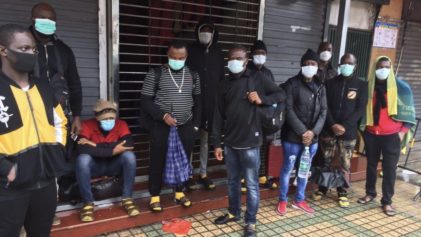
In June 2012, they were rounded up, put onto buses and expelled. “You’re not responsible for the future. Those who have been repatriated are people that have agreed to it, and their home country has agreed and cooperated,” said Paul Hirschson, deputy spokesman for the Israeli ministry of foreign affairs.
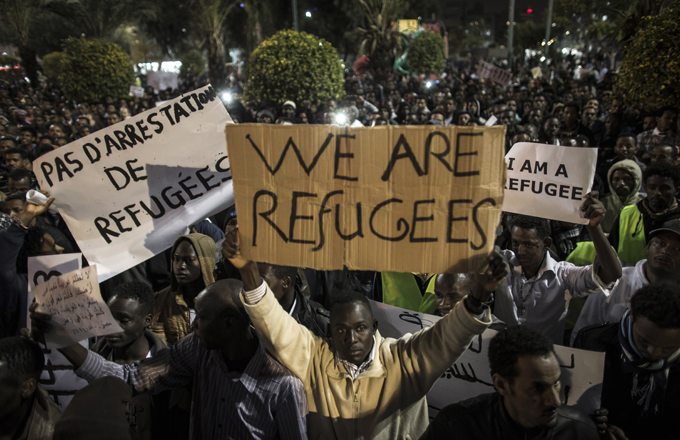
Numbering about 700 before the deportations began, South Sudanese asylum seekers represent a tiny fraction of the nearly 60,000 African migrants in Israel, most of whom are from Sudan and Eritrea.
“Every single one of the illegal migrants is entitled to apply for refugee status determination … They will be checked and evaluated to see whether they are entitled under international law to refugee status and if they are, they will be granted refugee status,” Hirschson said.
But since its creation in 1948, Israel has recognized fewer than 200 people as refugees, and only 9 percent of all asylum seekers in the country are even eligible to apply for refugee status determination (RSD).
Rather than process such claims, Israel applies temporary group protection to most asylum seekers, a status it also refers to as “deferred deportation.” This designation protects people from repatriation, but doesn’t provide them with any social rights in Israel. It initially applied to South Sudanese asylum seekers, but the government lifted the group protection just before the deportations.
“I came out with nothing: no education, no money,” said Franco Kombe, who was deported from Israel in June 2012 after having lived there with his family for four years. “Many families that came … from Israel are suffering,” Kombe told Al Jazeera this week, explaining he hasn’t held a stable job since he returned to Juba a year ago.
Read the full story at aljazeera.com