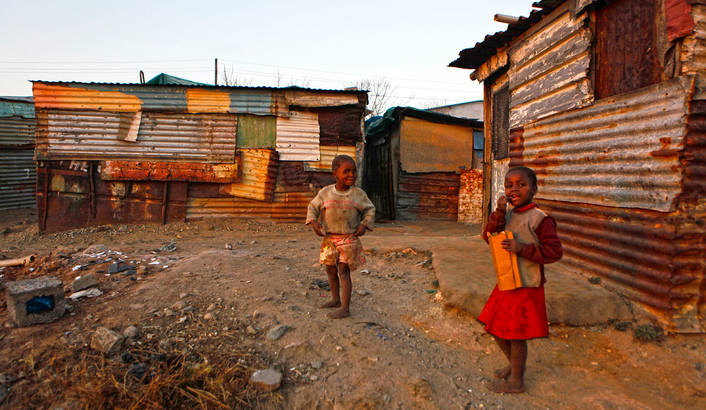
 With a speech on inequality last week, President Obama sought to kick-start a national debate about the growing gap between America’s rich and poor and what to do about it. Since 1979, U.S. productivity has increased by more than 90 percent, but the income of the typical family has increased by less than 8 percent. Worse, inter-generational inequality is huge.
What the president didn’t note is that almost everything he suggests about the U.S. income gap is also true about income distribution worldwide. This has implications for how we should think of fighting global poverty.
The comparatively good news about global incomes over the past 20 years—as opposed to incomes in the United States—is that the largest proportional increases have been enjoyed by those in the middle. Global income expert Branko Milanovic estimates (PDF) that worldwide, consumption for the median inhabitant increased about 80 percent over the 1998-2008 period, compared to around a 60 percent increase for the world’s highest-spending 1 percent.
Of course that still leaves space for massive global inequality. The median person in the world today (give or take, the 3,564,000,000th person) lives on about $1,225 a year (PDF) according to Milanovic. He estimates that the poorest 5 percent of Americans are still living on more than that—around $3, 000 to 4,000 per capita per year. Only the richest 5 percent of people in India live on the same amount.
According to Edward and Sumner, nine out of 10 of the world’s richest 1 percent—the 71 million people in households that enjoy incomes somewhere around $250,000 and above—live in North America and Europe. And the richest 1 percent of the planet’s population accrued $1.5 trillion of the global increase in consumption from 1990 to 2010. Compare that to the 35 percent of the world that lived on less than $2 a day in 2010. Collectively, they got about $0.5 trillion in increased consumption. Give or take, each member of the bottom third of humanity got $1 in increased consumption for each $100 of increased consumption by the richest 1 percent. Or consider another metric: A little more than 3 percent of the world live on $50 or more a day. Yet that 3 percent accounted for 29 percent of consumption growth from 1990 to 2010.
Source: businessweek.com


