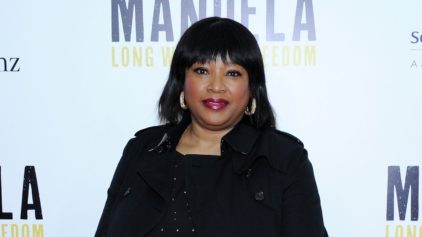
Naomie Harris has been praised for her portrayal of Winnie Madikizela-Mandela in the Nelson Mandela biopic “Mandela: Long Walk to Freedom,” however the actress revealed that taking on the role of Mandela’s wife presented some very unique challenges.
The biopic, which hit theaters Nov. 27, focused on the life of the former South African president and it also highlighted the strong woman who was by his side during such a trying journey.
Watching her husband placed behind bars for 27 years presented serious challenges and hardships in Winnie’s life, and Naomie felt the pressure to bring those emotions to life.
“She’s victimized and harassed a lot by the police, and those experiences really forced her to reinvent herself, in a way, into this warrior woman,” she said.
The emotion that stemmed from police harassment created one of the biggest challenges of the role.
“The thing I struggled with was her bitterness and her hatred, because her journey forced her to have those things,” Naomie added.
The director of the film, Justin Chadwick, knew that the role of Winnie would be challenging, especially considering the realistic portrayal that he wanted to present.
“The Winnie that we’re showing isn’t this kind of caricature that’s been portrayed before,” Chadwick said. “It needed an actor who was not afraid to scratch underneath there.”
In addition to taking on the difficult role, Naomie explained that reactions to the film internationally made her nervous, but proud.
“It was nerve-wracking,” she says. “When we showed the film in Toronto, people were laughing, responding noisily. In South Africa, there was silence. I thought: Oh no! But afterwards, people were in tears, incredibly moved, processing the film on a profound level. One of Mandela’s nieces was sobbing in my arms.”
The biopic, which featured Idris Elba as Nelson Mandela, has drawn a lot of attention and even caused President Barack Obama to cry when he saw it.