
5 Reasons Jamaican Culture Is the Most Popular Per Capita

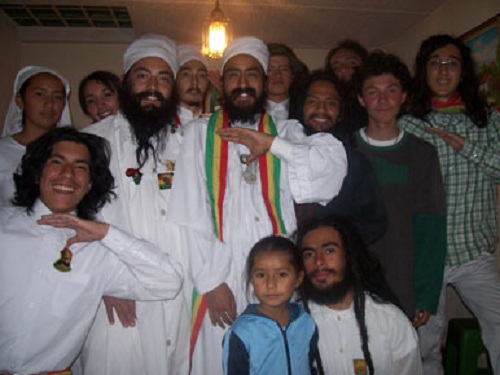
Rastafari In Colombia

Rastafari In Colombia


Rastafari Religion 

Rastafari is a worldwide Africa-centered cultural way of life and political movement that was founded in Jamaica in the early 1930s by Leonard P. Howell, a student of Marcus Garvey. After learning of the injustices to Black people around the world, Howell established the Rastafari movement and  was arrested more than 50 times in the process. A pivotal point in Rastafari is when Howell was imprisoned for two years for sedition after publishing his book “The Promise Key.” Thereafter, the Rastafari movement grew into large numbers in Jamaica, as the British colonizers turned Howell into a political prisoner.

By the late 20th century, awareness of the Rastafari movement had spread throughout much of the world, largely through interest generated by reggae music, especially the major international success of Jamaican singer-songwriter Bob Marley.

Today, according to one estimate, there are more than one million Rastafari faithful worldwide, with Rastas dwelling in Africa, Asia, Australia, Europe, North America, and South America.

Source:  wikipedia.org

Subscribe To The ABS Newsletter — Get our stories in your inbox.

Independent journalism still matters.

We hope this story was worth your time. For over 14 years, Atlanta Black Star has stayed Black-owned and independently run. We didn't get here by waiting on ad budgets that were never built to prioritize us. Our readers did that.

Corporate support for Black media has always been thin. Outlets like ours get roughly 1% of the $170 billion spent on U.S. advertising each year, and that margin is shrinking further as advertisers walk back the DEI-linked commitments they made in 2020. That's the backdrop. It's not why we're asking.

The wider picture isn't any steadier. Newspaper ad revenue has fallen more than 80% since 2005, and local newsrooms are closing at a rate of roughly two a week nationwide. When outlets go under, it's rarely the ones built to center a Black perspective from the ground up that get to stick around.

We know a request for support isn't why you came here. But without readers choosing to fund this work directly, the depth of reporting we can do at home and abroad shrinks along with everyone else's. If you're not in a position to give, that doesn't change how much we value you as a reader.

If you are able to, a recurring contribution does more for us than a single one-time gift, because it lets us plan the next investigation instead of just the next invoice. It takes about 30 seconds, no long form, no account. Thank you for continuing to support independent journalism and freedom of the press.

Latest from Atlanta Black Star

Back to top