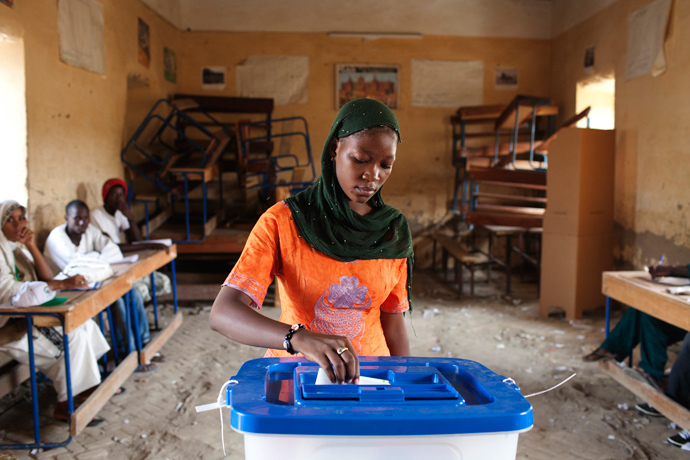
 Mali is voting in parliamentary elections in a vote designed to seal the nation’s return to democracy in the wake of a military coup and Islamist insurgency. Security is high amid fears of violence.
Polling opened in Mali on Sunday in a parliamentary vote designed to solidify the nation’s fragile democracy, three months after the election of President Ibrahim Boubacar Keita.
Some 6.5 million people are eligible to elect the new national assembly, with more than 1,000 candidates, including 135 women, competing for 147 seats.
Voting began at 8 a.m. local time under heavy security as fears of reprisal attacks from Islamist militants hung over the occasion. The north of the country was of particular concern, where al Qaeda-linked militants are still active in the region.
A secessionist Tuareg uprising in the north of the country led to a military coup in March 2012 and the overthrow of President Amadou Toumani Toure. The Tuareg seized control of an area larger than France in the chaos that followed, only to be ousted by al Qaeda-linked Islamist groups. They, in turn, were driven out by a French-led ground and air offensive in January of this year, but have more recently resumed activity.
Dozens of Malian and Chadian soldiers in the United Nations’ MINUSMA peacekeeping mission have been killed in the country’s north in recent months.
Two French radio journalists were also kidnapped and killed by members of al Qaeda in the Islamic Maghreb in the north’s lawless region of Kidal on November 2.
Source: DW.DE