 Now that they have failed in defunding or delaying the implementation of Obamacare, Republicans in Congress have shifted their tactics to attacking the health care law for its problem-plagued rollout with I-told-you-so glee.
They hope their change in tactics shifts the public’s attention away from the destruction they caused by the 16-day government shutdown over the law, and put them in a new heroic light for pointing out all the flaws in the system.
“I think the biggest part of Congress’s job is to provide proper oversight of the executive branch of government,” Speaker John A. Boehner said at a news conference yesterday. “And when it comes to Obamacare, clearly there is an awful lot that needs to be held accountable.”
But many Democrats who have vigorously defended Obamacare are publicly voicing their frustration and embarrassment by the many problems in the program’s rollout, mainly focused on the government website, healthcare.gov.
After participating in a meeting with administration health care officials on Capitol Hill yesterday morning, Rep. Richard Nolan, Democrat of Minnesota, told The Associated Press that the computer fiasco has “damaged the brand” of the health care law.
“The president needs to man up, find out who was responsible, and fire them,” Nolan said.
Florida Democrat Senator Bill Nelson also said somebody should be held responsible for the glitches.
“That’s the problem in government today,” Nelson told ABC’s Miami affiliate. “People are not held to account.”
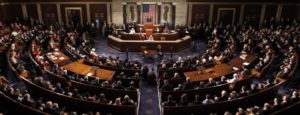
Smelling blood, the Republican-controlled House has already scheduled hearings to look into the problem—less than a month into the rollout of the program. This will give them the chance to abuse the administration over the technical glitches, just in case things smooth out in coming months and the early problems are a distant memory. The hearings across multiple committees will examine the problems with the troubled website, the law’s exemption and waiver components, and the problems that some consumers are having accessing their doctors through the program.
During hearings, GOP lawmakers will focus on statements the Obama administration made in the months leading up to the website’s Oct. 1 launch.
Rep. Michael Burgess, R-Texas, told NPR that he repeatedly asked the administration if the website was going to be ready and officials told him not to worry.
“The obvious question comes up — were you purposely untruthful with me, or did you really believe this all was going to work and you just had no earthly idea that the system you devised was so flawed?” Burgess asked.
In the first hearing to take place today, House lawmakers will grill the contractors who developed the website. The House Energy and Commerce Committee will get the chance to rough up two companies, CGI federal and Quality Software Systems Incorporated about the problems that Americans have faced in trying to sign up for health care.
However, though the questioning is likely to be tough, Republican lawmakers surely will want to reserve most of the blame for the Obama administration. They will get that opportunity next week, when the Energy and Commerce Committee will question Kathleen Sebelius, secretary of health and human services. The Ways and Means and oversight committees are expected to follow.
“What we’re trying to figure out,” said Representative Fred Upton, Republican of Michigan and chairman of the Energy and Commerce Committee, “is how did all this taxpayer money get wasted and what is their remedy?”
The Obama administration announced yesterday that people who obtain health insurance by March 31 would not face tax penalties for being uninsured, which appears to be a change from previous policy that indicated they would face penalties if they hadn’t signed up by Feb. 15. The administration is extending the February deadline by six weeks so that it coincides with the end of the open enrollment period for health insurance, which it claims has nothing to do with glitches on the website.
“If the website glitches are just the tip of the iceberg,” said Representative Greg Walden of Oregon, chairman of the National Republican Congressional Committee, “it’s only a matter of time before the law sinks and takes with it those Democrats who wrote it, voted for it and are proud of it.”
“The two-week government shutdown allowed the Obama administration to hide from what a disaster the Obamacare rollout has been,” said Senator Orrin G. Hatch of Utah, “but the White House can’t hide any more.”
Obama has said he’s as frustrated as anyone and has promised a “tech surge” to fix the problematic website, which he pointed out is just one part of the health care law.
White House spokesman Jay Carney said in an effort to be more open about problems, the Department of Health and Human Services will start regular media briefings on Thursday.
Representative Charles B. Rangel, Democrat of New York, said he was “very disappointed” in the performance of the federal exchange and added that the administration had placed too much emphasis on using a website to shop for insurance.
“Poor folks who don’t have insurance — a lot of them don’t have computers either,” Rangel told the New York Times. “In some communities, we should be making greater use of community health centers and hospitals — places where people know people — rather than the Internet.”
Democrats from California, Kentucky, Nevada and New York were quick to point out that their state-run exchanges were working well, in sharp contrast to the federal exchange.
Representative Nancy Pelosi, Democrat of California, who as speaker did more than anyone else to push health care legislation through the House, said, “The situation right now is unacceptable, it’s unfortunate.”
But Pelosi emphasized the larger goal of ensuring access to affordable health care for all Americans “as a right, not a privilege.”
“That was our mission, we accomplished it, and we’re proud of it,” Pelosi said. “Is the implementation of it perfect in every way? Not yet. But the goal of it still is the same, we’re still very, very proud of that, and not for one half a second, not a nanosecond, would I say that I’m disappointed about that.”