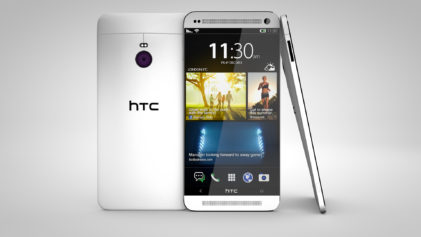
Maxed Out: HTC One Max Revealed

HTC-One-Mini-HTC-One-MaxSmartphone maker HTC has released its high-end large screen phone, the HTC One Max. The phablet category, which was introduced by Samsung, has proven to be viable, especially for customers who have to make a choice between having a smartphone or a tablet. According to engadget.com:

“The debate around giant smartphones is over. Manufacturers like Samsung, Sony and LG have amply demonstrated that it’s possible to build a pocketable, phone-like device with a screen bigger than five inches. Now it’s HTC’s turn. But instead of re-imagining the much-praised One for this new category of device, HTC’s designers have mostly just cloned it, while adding a drop of Miracle-Gro to produce a 1080p panel that measures 5.9 inches diagonally, versus the One’s 4.7 inches.

“The result is the One Max, a product that carries over some good things from the One while also finding room for a few notable extras like a fingerprint scanner and expandable storage. At the same time, it also introduces some major snags — not least of which are the its intimidating size and weight. The job ahead of us is to somehow find the upper body strength to weigh it all up.”

HTC has been struggling to keep up with the stiff competition lately from companies like Samsung. However, HTC makes great devices and hopefully the HTC One Max will help attract new customers to the brand.

Check out the HTC One Max video below.
Democracy needs journalism it can trust.

This election season, the stakes are higher than usual — and so is the pressure on newsrooms to soften their coverage, stay quiet, or just disappear. Independent reporting, the kind that answers to readers instead of advertisers or political pressure, matters more in a moment like this, not less.

For over 14 years, Atlanta Black Star has stayed independent and reader-funded. We have no corporate owner and no shareholders telling us what to cover or how to cover it. That independence is also our biggest vulnerability: nothing protects it except readers choosing to fund it directly.

Newspaper ad revenue has fallen more than 80% since 2005, and local newsrooms are closing at a rate of roughly two a week nationwide. When outlets go under in a moment like this, it's rarely the independent, reader-funded ones that get to stick around.

We know a request for support isn't why you came here. But without readers choosing to fund this work directly, the depth of reporting we can do at home and abroad shrinks along with everyone else's. If you're not in a position to give, that doesn't change how much we value you as a reader.

If you are able to, a recurring contribution does more for us than a single one-time gift, because it lets us plan the next investigation instead of just the next invoice. It takes about 30 seconds, no long form, no account. Thank you for continuing to support independent journalism and freedom of the press.

Back to top