15 Black Uprisings Against European and Arab Oppression They Won’t Teach in Schools

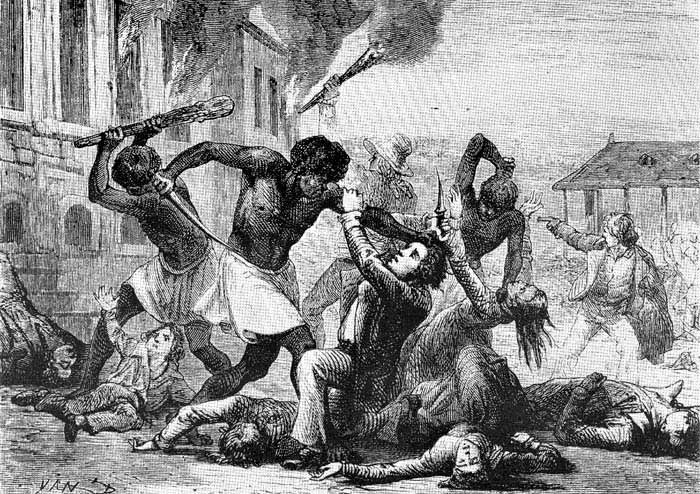
Tacky's War

Tacky’s War

In 1760, Tacky, a Jamaican slave originally from Ghana, planned and organized an uprising to gain freedom from slavery. On Easter Sunday, Tacky and his army began the revolt, easily took over the plantations, and killed the slave owners.

At the end of the battle, over 60 slave plantation owners were killed before they were able to capture Tacky. However, Tacky’s War didn’t end there. The movement sparked revolutions throughout the island, and it took British forces months to re-establish order.

Source: Jamaicans.com
 

Battle of Isandhlawana

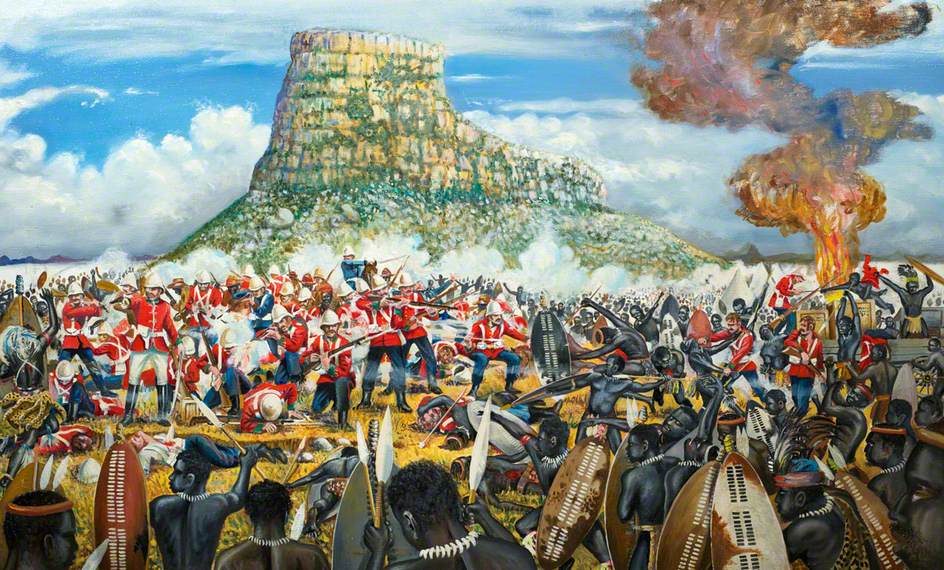
Battle of Isandhlawana (South Africa)

The people of South Africa have Battle of Isandhlawana (South Africa)resisted European control since the Dutch and British began invading in the 17th century. In some parts of South Africa, they fought European control until the end of the 19th century. In spite of colonial efforts, Zululand remained free until 1880. In 1879 in a strong show of resistance, a Zulu army under the leadership of King Cetshwayo at Isandhlawana defeated a force of 8,000 European soldiers, killing 1,600. This was the single greatest defeat suffered by the British in all their colonial endeavors in Africa and Asia.

Source: exploringafrica.matrix.msu.edu

Democracy needs journalism it can trust.

This election season, the stakes are higher than usual — and so is the pressure on newsrooms to soften their coverage, stay quiet, or just disappear. Independent reporting, the kind that answers to readers instead of advertisers or political pressure, matters more in a moment like this, not less.

For over 14 years, Atlanta Black Star has stayed independent and reader-funded. We have no corporate owner and no shareholders telling us what to cover or how to cover it. That independence is also our biggest vulnerability: nothing protects it except readers choosing to fund it directly.

Newspaper ad revenue has fallen more than 80% since 2005, and local newsrooms are closing at a rate of roughly two a week nationwide. When outlets go under in a moment like this, it's rarely the independent, reader-funded ones that get to stick around.

We know a request for support isn't why you came here. But without readers choosing to fund this work directly, the depth of reporting we can do at home and abroad shrinks along with everyone else's. If you're not in a position to give, that doesn't change how much we value you as a reader.

If you are able to, a recurring contribution does more for us than a single one-time gift, because it lets us plan the next investigation instead of just the next invoice. It takes about 30 seconds, no long form, no account. Thank you for continuing to support independent journalism and freedom of the press.

Back to top