The three women who were held captive in Cleveland for more than a decade and whose story transfixed the nation have finally broken their silence, using a three-minute video on YouTube to thank everyone and affirm that they are doing fine.
In the video, which was posted at midnight, Amanda Berry, Gina DeJesus and Michelle Knight appear separately on screen with a panorama of downtown Cleveland in the background, including the Rock and Roll Hall of Fame and Museum.
Berry, who appears first, says she is “happy to be home with her family and friends” and that she is getting “stronger each day.” She asks that everyone continue to respect her privacy.
DeJesus, who appears with her parents, thanks the public for the donations to the Cleveland Courage Fund, which raised more than $1 million from around the world to go directly to the three women, in addition to Berry’s daughter, who was born during her captivity.
Knight, who speaks last, says she is “doing just fine” and talks extensively about her religious faith.
“I will not let the situation define who I am. I will define the situation,” she adds.
The three women, who were abducted separately between 2002 and 2004, managed to break free in May in a saga that took over the airwaves.
After the story of their captivity on a normal residential street in Cleveland unraveled, many questions were raised—How did the victims go undetected so long? Did the Cleveland police make mistakes when several neighbors say they called to report suspicious activity coming from the house? Why did police fail to fully investigate and why does the police chief say they didn’t receive the phone calls?
Ariel Castro, 52, who had been fired from his school bus driving job in November for “lack of judgment,” was arrested on Monday right after the women escaped.
While several neighbors said they had called police to report suspicious activity at the house where Berry, DeJesus, Knight and Berry’s 6-year-old daughter escaped from their captors, police denied those calls from neighbors were made.
“We have no record of those calls coming in over the last ten years,” Cleveland Police Chief Michael McGrath said on NBC’s “Today” show. He squirmed when he was pressed by Savannah Guthrie on whether he was calling the neighbors liars, repeating that there was no record of the calls and he was confident police did not miss opportunities to find the women.
“Absolutely, there’s no question about it,” he said.
McGrath said the women had been allowed outside “very rarely” during their captivity and were in good physical condition, “considering the circumstances.”
“They were released out in the backyard once in a while,” he said.
It was actually the sight of a woman crawling naked in the backyard by a little girl who lived nearby that prompted one of the police calls that McGrath is denying.
Elsie Cintron, who lives three houses away, told CBS News that her daughter once saw a naked woman crawling on her hands and knees in the backyard several years ago and called police. “But they didn’t take it seriously,” Cintron said.
Neighbor Israel Lugo said he called police in November 2011 after his sister saw a girl at the house holding a baby and crying for help, but after police came and banged on the door several times, they left when no one answered, he said.
Lugo also said about eight months ago, his sister saw Ariel Castro park his school bus outside and take a large bag of fast food and several drinks inside.
“My sister said something’s wrong … That’s when my mom called the police,” he said.
Lugo said police came and warned Castro not to park the bus in front of his house.
Neighbor Anthony Westry said a little girl could often be seen peering from the attic window of the Castro house.
“She was always looking out the window,” he said. Castro would take her to the park to play very early in the morning, “not around the time you would take kids to play,” he said.
But despite all these statements, Cleveland city officials were sticking by their claims that no one called.
Berry, now 27, whose 6-year-old daughter was conceived and born during her captivity, was a prisoner in the house along with DeJesus, 23, who vanished at age 14 in 2004, and Knight, 32, who was 20 when she went missing in 2002.
Cleveland Mayor Frank Johnson said, ”We have no indication that any of the neighbors, bystanders, witnesses or anyone else has ever called regarding any information, regarding activity that occurred at that house on Seymour Avenue.”
“We didn’t search hard enough. She was right under our nose the whole time,” said Angel Arroyo, a church pastor who had handed out flyers of DeJesus in the neighborhood.
Even more bizarre, Ariel Castro, who gave children in the largely Puerto Rican neighborhood rides on his motorcycle, even played bass guitar in salsa and merengue bands with Tito DeJesus, an uncle of Gina DeJesus. The uncle said he recalled visiting Castro’s house but never noticed anything out of the ordinary.
In addition, Ariel Castro was friends with the father of Gina DeJesus and helped search for her after she disappeared, according to Khalid Samad, a friend of the family.
“When we went out to look for Gina, he helped pass out fliers,” said Samad, a community activist who was at the hospital with DeJesus and her family on Monday night. “You know, he was friends with the family.”
Neighbor Antony Quiros said he saw Castro comforting Gina DeJesus’ mother at a vigil for her about a year ago. Neighbor Francisco Cruz said he was with Castro the day investigators dug up a yard looking for the girls and Castro told Cruz, “They’re not going to find anyone there,” Cruz recalled.
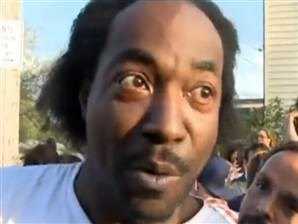
In one of the most bizarre developments in the saga, neighbor Charles Ramsey, who helped Berry escape, quickly became an Internet sensation because of the colorful language he has used in describing his role in the ordeal.