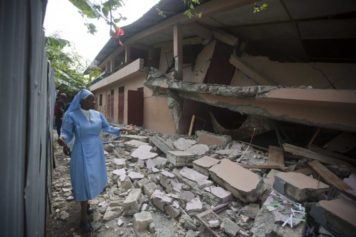
A U.S. government program to build housing in Haiti after the devastating 2010 earthquake will only construct one-sixth of the homes intended because of poor planning, according to a report by the Government Accountability Office (GAO) released Tuesday.
Plans by the U.S. Agency for International Development (USAID) to build housing in Haiti after the earthquake were slashed due to “faulty and inaccurate cost estimates,” bringing down the number of new homes from 15,000 originally to 2,649.
Efforts to assist Haiti’s infrastructure, including construction of a port and power plant as well as housing, have had “mixed results” and suffered from delays and lack of oversight, according to the report which was requested by the Republican-controlled Foreign Affairs Committee of the House of Representatives.
Soon after the earthquake, which killed an estimated 230,000 people in and around the capital Port-au-Prince, Congress provided $1.6 billion in reconstruction funding for Haiti, of which $651 million went to USAID.
The GAO, which serves as Congress’ investigative arm, was asked last year by the congressional committee to examine the progress of U.S. reconstruction efforts in Haiti.
The report also found that a new port in northern Haiti which was expected to be completed by 2015 is two years behind schedule and could take 10 years to complete.
The USAID mission in Haiti lacked staff with technical expertise in planning and construction of the port, it added. On top of that U.S. assistance to Haiti suffered from a lack of regular and detailed reporting to Congress of projects being funded.
“This GAO report is alarming and showcases the need to further investigate and ensure that U.S. taxpayer dollars are not being wasted or abused in Haiti,” said veteran Miami Representative Ileana Ros-Lehtinen, a Republican who is the former chair of the Foreign Affairs Committee.
“This report shows a significant and sobering disconnect between what was originally promised for the Haitian people, and what it appears USAID is now prepared to deliver,” added Representative Eliot Engel, a Democrat from New York, who sits on the same committee.
Whereas USAID originally sought to house up to 90,000 Haitians in its New Settlements program, fewer than 16,000 people were now likely to benefit, the GAO found.
The cost increases resulted in part from the Haitian government requesting improvements such as flush toilets, the report said. The program was also handicapped by land title issues and lack of community partnerships.
Read more: Reuters