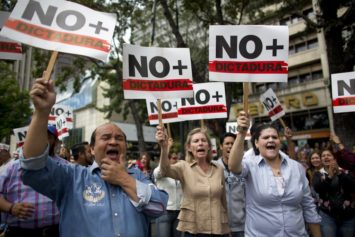
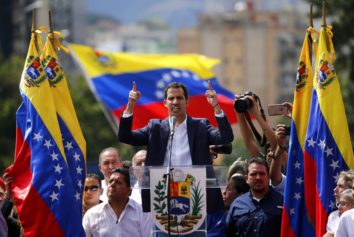
Venezuelan Vice President Nicolas Maduro squeaked out a narrow victory at the polls this weekend, but opposition leader Henrique Capriles refuses to accept the result, demanding a recount in the closely watched election.
Since Hugo Chavez’s death last month, Maduro, his confidant and hand-picked successor, had a handy lead in polls. So it came as a surprise when Maduro beat Capriles by just less than 300,000 votes — 50.66 percent to 49.07 percent.
“Today’s loser is you,” Capriles said at a news conference on Monday, referring to Maduro. “We won’t recognize a result until every vote has been counted.”
“There should be no doubts about the election results,” he said in an address before a large crowd at the presidential palace in Caracas. “The institutions are functioning. If 7,500,000 Venezuelans said that Nicolas Maduro should be the president of the republic until 2019, this must be respected; the democracy and the power of the majority,” Maduro said.
Since Venezuela uses electronic voting machines, there are printed paper ballots as backup that can be used for recounts. Maduro said he welcomed a recount.
“We are calling for respect of the results. If they want do an audit they are welcome to do it. They can do whatever audit they want to do. We trust in the Venezuelan electoral system. We welcome an audit,” he said.
After a campaign that was frequently nasty in the wake of Chavez’s death, the turnout was 78 percent, down from just over 80 percent in the October election when Chavez beat Capriles by a near 11-point margin.
“This result does not reflect the reality of what Venezuelans want and aspire to,” Capriles said in Caracas. “Mr. Maduro, if you were illegitimate before, now you are more so.”
“I tell you firmly, this struggle is not over. It will end when Venezuela is a prosperous country, when people can live better,” Capriles said.
Capriles accused the government of pressuring civil servants to vote for Maduro. But in stepping in for Chavez, Maduro inherited a formidable electoral machinery, which used government employees to distribute campaign pamphlets and attend rallies in big groups.
Capriles was bolstered by discontent over the nation’s soaring murder rate, chronic food shortages, high inflation and regular power outages, but apparently it wasn’t enough. Many world leaders were rooting for Capriles, since he had promised to normalize relations with world powers such as the U.S.—something Chavez used against him in last year’s election.