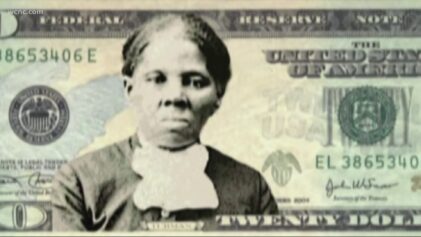
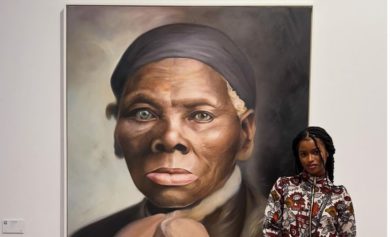
It’s always interesting to learn the diverse events that occurred years ago on the same date that you are alive. This time, it’s the anniversary of Harriet Tubman‘s death 100 hundred years ago on March 8, 1913. In the state of New York, in Auburn, where she is buried, and in Maryland and Canada, where she led hundreds to freedom, dozens of events will be held to mark her contribution to American history, not just Black history.
Named Araminta when she was born into slavery in 1819 or 1820, she changed her name to Harriet around the time of her marriage in 1844 to John Tubman, perhaps to honor her mother. There’s not much known about her marriage. Some believe she ‘adopted’ a child, but no proof has been found to date. Of course, any children would have been enslaved as well. Harriet escaped from slavery in 1849, using the Underground Railroad to trek 90 miles from Maryland, a slave state, to the free state of Pennsylvania.
The fact that Harriet returned to the South to guide other slaves to the freedom of the North isn’t as remarkable as the fact that she did it again and again and again. During the Civil war, she worked for the Union Army as a cook, nurse, armed scout and spy. She was the first woman to lead an armed expedition in the war, leading the Combahee River Raid, which liberated more than 700 slaves in South Carolina. Blacks in freedom and chains referred to her as “Moses.”
Passage of the Fugitive Slave Act in 1850 meant the North was no longer safe, as runaway slaves could be returned to the South, and slavery. Harriet didn’t stop her work, she merely extended the travel, all the way to Canada.
After the war, Harriet settled in Auburn, New York, where lived for many years and is now buried. She died in 1913…
Read More: forharriet.com