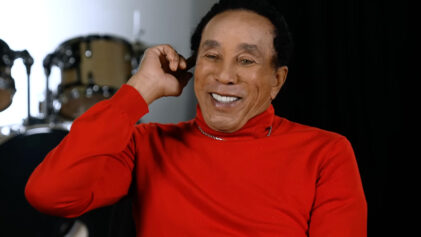
Bobby Rogers, who was born on the same day in the same Detroit hospital as the Motown crooner Smokey Robinson, with whom he harmonized in high school and eventually in the Hall of Fame singing group the Miracles, died Sunday in Southfield, Mich. He was 73.
The cause was complications of diabetes, Patricia Cosby, his friend for half a century. said. Rogers also suffered from dementia, she said.
Rogers, tall, bespectacled and jovial, brought a smooth tenor to the Miracles, who were founded in the mid-1950s and became one of Motown’s longest-lived and most important ensembles. Known for their silky harmonies, snazzy threads and coolly coordinated dance steps onstage (early on, Rogers was the group’s choreographer), they recorded for Berry Gordy Jr.’s Tamla label and became a stanchion of the Motown sound and Mr. Gordy’s recording empire.
Their hit songs included “Shop Around,” “You’ve Really Got a Hold On Me,” “Mickey’s Monkey,” “Going to a Go-Go” and, after a name change — to capitalize on Robinson’s stardom they became Smokey Robinson and the Miracles in 1967 — “I Second That Emotion” and “Tears of a Clown.”
The Miracles endured even afterRobinson left the group in 1972, and their hit “Love Machine,” released in 1975, with Billy Griffin as the lead vocalist, featured a sexy growl by Rogers — “Ooooooyeahhh” — during the chorus.
Robert Edward Rogers was born on Feb. 19, 1940. His mother, Lois, was a seamstress, and his father, Robert, worked in an auto factory.
He sang as a young teenager with Robinson and another future Miracle, Pete Moore. In 1955, Robinson, Moore and others formed a group called the Five Chimes, whose membership eventually included Robinson’s classmate at Northern High School, Rogers, as well as his cousin Emerson Rogers, known as Sonny.
The group changed its name to the Matadors, but when Sonny Rogers joined the Army, Mr. Robinson, who was the group’s chief songwriter as well as its lead singer, asked another Rogers, Sonny’s sister Claudette, to replace him (they would later marry), at which point the name Matadors was deemed too masculine, and the group became the Miracles.
They met Mr. Gordy, then merely a budding music entrepreneur, at an audition with the manager of the singer Jackie Wilson in 1957, and, as the story goes, it was Mr. Robinson who encouraged Mr. Gordy to start his own company. The following year, with Mr. Gordy as their producer, the Miracles recorded “Got a Job” (a response to the Silhouettes’ novelty doo-wop number “Get a Job”), released on Bobby Rogers’s (and Robinson’s) 18th birthday. In 1959 they recorded their first single for Mr. Gordy’s new company, “Bad Girl,” and in 1960 the Miracles had their first hit, “Shop Around,” which sold a million records.
Bobby Rogers, who was known as the Miracles’ best dancer, shared writing credit with Robinson on several well-known songs, including “Going to a Go-Go”; “The Way You Do the Things You Do,” recorded by the Temptations; and “First I Look at the Purse,” a hit for the Contours in the 1960s and the J. Geils Band in 1970. When Mr. Robinson was elected to the Rock and Roll Hall of Fame in 1987, many fans objected that he went in without the Miracles. That oversight was remedied in 2012, when Mr. Rogers, Mr. Moore, Claudette Robinson, Ronnie White and the guitarist Marv Tarplin were inducted together.
Read more: NYTimes