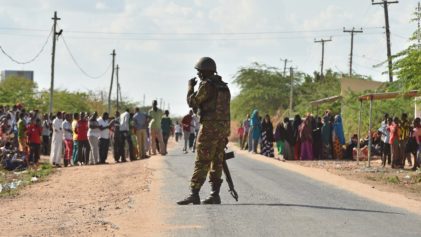
Fearful that rebels in Mali could pose a threat to France itself, French soldiers launched a military operation in Mali, bombing rebel forces and joining with the Malian army to kill more than 100 rebels.
The French also suffered a casualty, as a French pilot died when his helicopter was shot down by rebels near Mopti.
In addition, when France mounted a commando raid to free a French hostage in Somalia, being held by al-Shabab militants linked to al-Qaida, the hostage was killed.
While European nations have sometimes been reluctant to get involved in internal conflicts on the African continent, Mali appears to be different because of its relative proximity to Europe and the strength of al-Qaida there. Western countries fear that Islamists will use Mali as a base for attacks on the West and expand al-Qaida in Somalia and North Africa.
“We’ve already held back the progress of our adversaries and inflicted heavy losses on them,” said French President Francois Hollande in a story by Reuters. “Our mission is not over yet.”
France is eager to get assistance in its support of the Malian army from other nations in West Africa. Ivory Coast President Alassane Ouattara, chairman of the regional bloc ECOWAS, is pushing the start of the U.N.-mandated operation to deploy some 3,300 African soldiers. While the mission wasn’t expected to be ready until September, Ouattara wants forces mobilized sooner.
“By Monday at the latest, the [ECOWAS] troops will be there or will have started to arrive,” said Ali Coulibaly, Ivory Coast’s African Integration Minister. “Things are accelerating … The reconquest of the north has already begun.”
Led by Nigerian Major-General Shehu Abdulkadir, the multinational force is expected to draw heavily from Nigeria, Burkina Faso, Niger and Senegal.
But the militants have warned France about repercussions from its involvement.
“There are consequences, not only for French hostages, but also for all French citizens, wherever they find themselves in the Muslim world,” Sanda Ould Boumama, a spokesman for one of Mali’s rebel groups, Ansar Dine, told Reuters. “The hostages are facing death.”
The conflict in Mali appeared on the brink of possible resolution when rebels agreed to engage in peace talks to be held on Thursday, but that hope dissipated as the rebels began to move south.
According to military sources, the goal is to liberate all the occupied regions before Jan. 20, the 52nd anniversary of the founding of the Malian army.
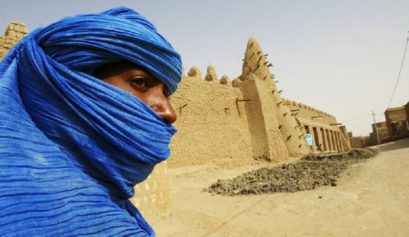
Since Mali’s president, Amadou Toumani Toure, was ousted in March, the north and east of the country have been under the control of Tuareg rebels and militias linked to al-Qaida.