Is Chocolate a Health Food?

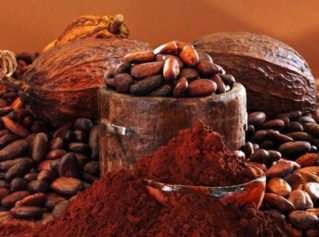
“Chocolate: I try to stay away from it,” commented my client, a runner who described herself as having a rampant sweet tooth. For her, chocolate fits into the categories of junk food, guilty pleasure and ruiner of good intentions to lose weight. Yet, she also recognized there is potentially a happier side of the story. Ads for (dark) chocolate suggest chocolate is good for us. Chocolate comes from plants and contains the same health-protective compounds that are found in fruits and vegetables.

So what is the whole story on chocolate? Is it little more than an alluring form of refined sugar, saturated fat and empty calories? Or does chocolate (in moderation, of course) have positive qualities that might be beneficial for athletes?

Here are some nuggets of information about chocolate. I’ll let you decide whether the health benefits of eating chocolate are greater than the health costs—and if you personally want to define chocolate as a “health food” within the context of your own sports diet.

The “Bad”

The bad news is chocolate consists of primarily saturated fat and sugar. A Hershey’s Chocolate Bar (43 g) contains 210 calories, 24 grams sugar (46 percent of calories), 13 g total fat (55 percent of calories) and 8 g saturated fat, equivalent to a tablespoon of butter. Boo hoo. (But here’s how you can rationalize including this popular treat in your overall well-balanced sports diet: The fat in chocolate does not raise bad cholesterol levels and the sugar (carb) in chocolate fuels your muscles…)

People tend to eat chocolate in bursts—a lot in a day, such as on holidays or pre-menstrually—or none. The question arises: Would enjoying some chocolate every day help reduce an athlete’s urge to binge-eat the whole bag of, let’s say, M&Ms in a moment of weakness? That’s a good question and one that needs to be researched. We do know that deprivation and denial of food contributes to overeating. You know the syndrome: “I’m starting my diet Monday morning, so Sunday is my last chance to eat chocolate…” and there goes the whole bag of M&Ms.

I invite my clients to try taking the “power” away from chocolate by enjoying a little bit every day, such as for dessert after lunch. Ideally, daily chocolate could reduce it to being simply a commonplace plant food, just like bran cereal, an apple or carrot sticks. Give it a try?
 Read More:  Active.com

Still independent.

We hope this story was worth your time. For over 14 years, Atlanta Black Star has stayed Black-owned and independently run. We didn't get here by waiting on ad budgets that were never built to prioritize us. Our readers did that.

Corporate support for Black media has always been thin. Outlets like ours get roughly 1% of the $170 billion spent on U.S. advertising each year, and that margin is shrinking further as advertisers walk back the DEI-linked commitments they made in 2020. That's the backdrop. It's not why we're asking.

The wider picture isn't any steadier. Newspaper ad revenue has fallen more than 80% since 2005, and local newsrooms are closing at a rate of roughly two a week nationwide. When outlets go under, it's rarely the ones built to center a Black perspective from the ground up that get to stick around.

We know a request for support isn't why you came here. But without readers choosing to fund this work directly, the depth of reporting we can do at home and abroad shrinks along with everyone else's. If you're not in a position to give, that doesn't change how much we value you as a reader.

If you are able to, a recurring contribution does more for us than a single one-time gift, because it lets us plan the next investigation instead of just the next invoice. It takes about 30 seconds, no long form, no account. Thank you for continuing to support independent journalism and freedom of the press.

Back to top