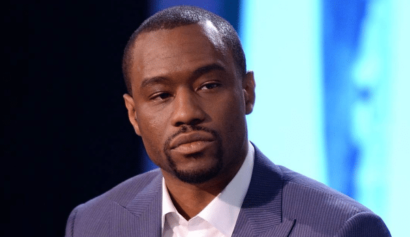
Congoloese militia leader Mathieu Ngudjolo Chui has been cleared of all charges against him by the International Criminal Court. Ngudjolo had been charged with several war crimes including murder and rape related to the destruction of Bogoro, a village in east Congo, in 2003. The acquittal came on the basis that the court could not prove that Ngudjolo led the group of soldiers who attacked the village of about 200 people.
The decision is just the second to come out of the ICC in its decade of existence, and the first to acquit the defendant. Though Ngudjolo was not found guilty, court officials did not suggest he was inculpable.
“If an allegation has not been proven beyond a reasonable doubt … this does not necessarily mean that the alleged fact did not occur,” French Judge Bruno Cotte said in the decision.
Many of the 200 people of Bogoro had been raped before being slashed to death by machetes, including children. Ngudjolo had been charged by the court in 2008, giving prosecutors years to build a case against him. Prosecutor Fataou Bensouda’s failure to convict Ngudjolo has brought the ICC prosecution strategy into question.
“The acquittal of Ngudjolo leaves the victims of Bogoro and other massacres by his forces without justice for their suffering,” Géraldine Mattioli-Zeltner, international justice advocacy director at Human Rights Watch told the Associated Press. “The ICC prosecutor needs to strengthen its investigations of those responsible for grave crimes in Ituri, including high-ranking officials in Congo, Rwanda and Uganda who supported the armed groups fighting there.”
Bensouda will appeal the acquittal, but will also need to fight against Ngudjolo’s release, which was ordered by ICC judges. A number of Congolese rebel leaders still face charges in the ICC, including Bosco Nitaganda, and Germain Katanga, who stood trial with Ngudjolo. The Congolese government continues to face rebel fighters throughout the country’s eastern region