The long-awaited soiree in the middle of the week attracted an invitation-only crowd of 800, including foreign diplomats, local celebrities and Haiti’s well-heeled and politically connected — all of whom had been waiting years for the final reveal.
As they munched on passed hors d’oeuvres and sipped on free-flowing wine, they couldn’t help but notice the bamboo, locally-grown orchids and sexy white furniture that lined the expansive courtyard. Oversized drum pendants hung from the building’s ceiling.
“It’s like being in New York City,” said Dr. Ranley Desir, a Miami cardiologist who flew in with wife Karine.
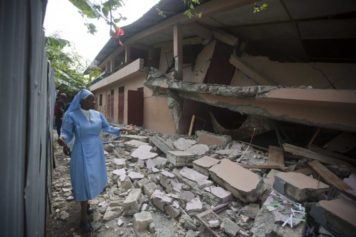
Nearly three years after it was hammered by disaster, Haiti’s Royal Oasis hotel finally opened its glass doors this week. With high-end shops and 128 rooms managed by the Spanish hotel franchise Occidental Hotels & Resorts, the luxury boutique hotel is the country’s first internationally branded hotel in more than a decade and the first multi-million dollar, high profile, locally built and financed project since the Jan. 12, 2010 earthquake.
“Royal Oasis is a beacon of modernity that we are all proud of,” said Jerry Tardieu, the 45-year-old Haitian entrepreneur who envisioned the project and brought 200 mostly Haitian shareholders together to make it a reality. “But mostly, it is a symbol of what we Haitians can do when we dare to dream big.”
That dream features a 10-level, earthquake-resistant South Beach-inspired building with a $1,300-a-night presidential suite, a yet-to-be-completed rooftop infinity pool and gray and off-white hues. They serve as a backdrop for the tributes to Haiti’s vibrant culture — ironworks, colorful beaded vases and photographs of Haiti’s untapped tourism potential — lining the otherwise neutral-colored walls.
The Wednesday night opening drew not only the country’s president and prime minister, but managers at competing hotels, who toured the $200 and up rooms, and those who regretted passing on the investment.
“I remember seeing the investor’s packet in 2007 and thinking, ‘This guy
Read the rest of this story on the Miamiherald.com