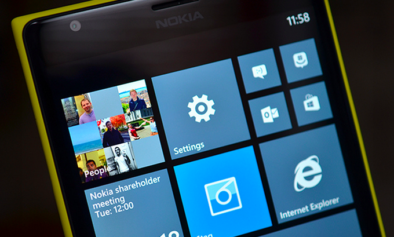
love drooling over the latest Lumia or Droid or iPhone, but we tend to forget about the low-end of the smartphone market. Nokia’s latest effort, the Lumia 620, is aimed squarely at the developing world. The Windows Phone 8-equipped device has quite a bit of value packed in, especially for just $250 off-contract.
The new Lumia, like every other phone in Nokia’s Windows Phone arsenal is eye-catching. It’s compact, and wrapped in an exchangeable polycarbonate shell that will come in seven different colors, allowing the battery to be user accessible. Nokia has also seen fit to add a MicroSD slot to allow the user to add additional storage to the 620’s 8GB of internal memory. Specs-wise, the 620 is predictably ho-hum for late-2012. A 3.8-inch, 800×480 touch screen runs on a dual-core 1GHz processor. The camera clocks in at 5MP. Remember though, this phone is $250 unsubsidized.
That’s why it’s perfectly okay for the phone to be mediocre in terms of specs. The Lumia 620 wasn’t even announced for the North American market: it will ship in Asia (to the giant Chinese and Indian smartphone markets) in January and spread to Europe and the Middle East shortly thereafter. For Nokia, this is the smart play. The high-end of the smartphone market is all but saturated by Samsung and Apple. It’s the developing world, with its slimmer margins and higher volumes, where the real growth is happening. Considering the relative instability of Android on lower-end handsets and Apple’s total absence from the bottom of the market, Nokia’s cheapest phone could also be its most important.
Source: DVice