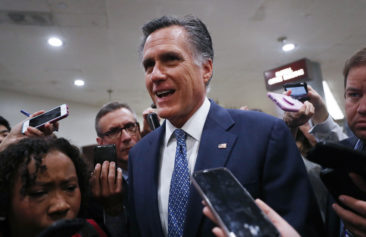
The legacy of Mitt Romney’s presidential campaign will be marked with by the number 47. Not only the 47 percent of voters that he notoriously dismissed during a fundraising event, but also by the 47 percent of voters who chose to support him. Analysts predict that Romney will have won under 47.5 percent of the popular vote when the final tallies come in, compared to President Barack Obama’s 51 percent.
Romney characterized 47 percent of American voters as dependent on big government and therefore sympathetic to the Democratic platform. Instead, the election proved that the conservative Republican platform could not make a strong enough appeal to the demographics outside of its own traditional backing. The “47 percent” comments reflected the fears those same voter groups saw in the GOP, a rich, white out of touch conservative who was unwilling to compromise with those the country’s less successful minority.
Republicans have since distanced themselves from Romney and the “47 percent” theory, realizing that the white majority and a strict conservative platform are no longer enough to carry the election. Romney went on to blame his loss on “gifts” promised to minorities, something even staunch Republicans like Newt Gingrich have since criticized. After the election it is clear that it is the GOP too, relies on 47 percent of the nation to support regardless, but if they want to win back the voters they will have to flirt with more moderate policies.
During the race for the Republican nominations, governor Romney was accused of being too moderate, but by time Election Day arrived, he was the embodiment of what voters fear in conservatives. The “47 percent” comments gave validation to the belief that the Republican Party is the political force behind upper class oppression, and the idea that its candidates are entirely willing to marginalize minority groups.
Of course, the comments weren’t enough to tank Romney’s campaign, as he had a 47 percent of his own to rely on, but the results show a lesson learned. The nation isn’t divided into two groups, if either party wants to maintain long term success, they need to be vocal in their willingness to support voters who feel marginalized, or at the very least, not do the opposite.