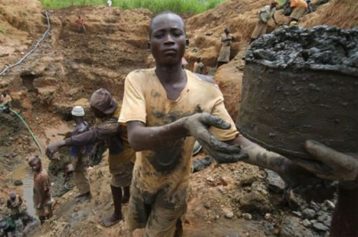
The elections being held in Sierra Leone today come at a pivotal moment for this West African nation that came to the world’s attention a decade ago because of the bloody conflict over “blood diamonds”—do they stick with an incumbent who has brought modest improvements to the desperately poor nation, particularly in the area of healthcare, or do they take their chances with an opponent who says he will focus on improving the economy and creating more jobs?
That choice sounds familiar to Americans, who just chose to reelect President Obama over an opponent who also promised more jobs.
President Ernest Bai Koroma and his administration have stressed to Sierra Leone citizens that it is important for the elections to be held peacefully and with complete transparency. There are posters plastered all across the capital Freetown with the message, “The world is watching us. Let us don’t disappoint them.”
“We are also pleased that it has been a peaceful process up to this moment and we hope that it will continue,” Koroma told reporters after he cast his vote.
Former military leader Julius Maada Bio, the most prominent of eight opposition candidates, told reporters at his polling station that he remained “very confident I am going to defeat the president in this very first round.”
Koroma won office in 2007 on promises to help uplift the country. This time around his slogan was “I Will Do More.”
One of his biggest successes has been the free medical aid offered to citizens. Sierra Leone has one of the highest rates of maternal mortality in the world. There is also hope for an economic boom because of several offshore oil discoveries made in the last three years. One of the poorest nations in the world—despite the presence of the lucrative diamond industry—Sierra Leone citizens live on an average of about $1.25 a day.
This is the third presidential election since the 11-year conflict ended in 2002, a brutal war during which rebels tortured victims and conscripted child soldiers.
Voters interviewed by the Associated Press today said they wanted to show the world how much progress has been made in Sierra Leone.
“We’ve been through a lot in the last 20 years. Now we’re trying to move forward,” said Mannah Kpukumu, 36, a civil servant waiting in a line that snaked near a giant cotton tree long before dawn. “We the young guys want employment and to be able to take care of our families.”
Richard Howitt, chief observer for the European Union election observation mission, predicted that the elections were not going to be perfect but said early reports indicated a high turnout.
“What we see is a very happy atmosphere with people enthusiastic to vote,” he said.
Horatio Bundoo Williams, a 34-year-old landlord, told the AP that while he wasn’t a fan of the governing party, it had earned his vote through their public policy improvements.
But many want to see more jobs.
“The economy is down and people are straining. Thousands of people are jobless,” said Alfred Coker, 27, as he waited outside a school to vote in downtown Freetown.
Tens of thousands died during the 1991-2002 conflict famously depicted in the film “Blood Diamond.”
Sierra Leone already has successfully held mostly peaceful votes since the end of the war. This time the country is bearing the sole responsibility for securing the vote, even though it is being organized with substantial foreign aid of some 46 percent of the election budget.
“Sierra Leone has experienced 11 years of war and now we want peace. So when the results are finally declared, if the elections are conducted in a free, fair and credible manner, everybody should accept it and cooperate with the government of the day,” said Marian Faux, who was voting in Freetown.