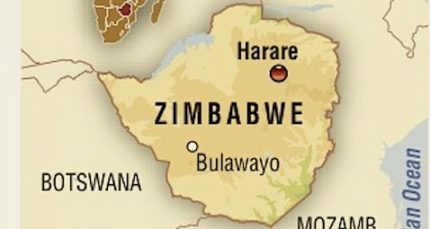
Zimbabwe President Robert Mugabe says he still wants to hold an election, but not before the country has had the chance to vote on a new constitution first.
According to court papers, he wants to hold elections in March 2013, with a referendum on a new constitution coming this November.
Mugabe’s long-time rivals in the Movement for Democratic Change have condemned this timetable as “unrealistic”.
The two sides have been unable to agree on a draft constitution, which is supposed to be in place before the new election.
Mugabe, 88, had previously always insisted that the elections should be held this year.
The MDC, led by Prime Minister Morgan Tsvangirai and backed by South African mediators, insists that a new constitution is in place before the new polls to ensure they are free and fair.
Mugabe, who has been in power since independence in 1980, has denied accusations that previous elections were rigged in his favor.
Tsvangirai pulled out of the previous election in 2008, citing systematic attacks on his supporters by the army and pro-Mugabe militias.
The political uncertainty pushed Zimbabwe’s economy into a free fall, forcing the pair to agree to form a power-sharing government.
Mugabe’s proposed election timetable was included in court papers in a case about when to hold by-elections.
The Supreme Court had ordered that by-elections for several vacant parliamentary seats be held by October 1. However, the president has appealed, saying it would cost too much money when wider elections are expected soon.
Mugabe’s proposal was immediately rejected by MDC spokesman Douglas Mwonzora.
“The date for the election especially is unilateral, unrealistic and has no scientific or legal basis,” he told the AFP news agency.
Mugabe and Tsvangirai would be expected to face each other in the poll, which is supposed to be held by next year.
Mugabe was one of the leaders of the country’s liberation movement against white-minority rule, before he was elected into power in 1980. He served as Prime Minister from 1980 to 1987, and has served as first executive since 1987.
Mugabe rose to prominence in the 1960s as the Secretary General of the Zimbabwe African National Union (ZANU) during the conflict against the white-minority rule government of Ian Smith. Mugabe was a political prisoner in Rhodesia for more than 10 years between 1964 and 1974.