The U.S. economy generated jobs last month at the fastest pace since February, a sign it is resilient enough to pull out of a midyear slump and grow modestly even as the rest of the world slows down.
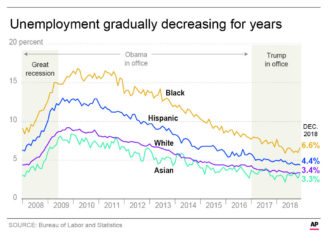
The 163,000 jobs employers added in July ended three months of weak hiring. But the surprising gains weren’t enough to drive down the unemployment rate, which ticked up to 8.3 percent last month from 8.2 percent in June – the 42nd straight month the jobless rate has exceeded 8 percent. The United States remains stuck with the weakest economic recovery since World War II.
The latest job numbers, released Friday by the Labor Department, provided fodder both for President Barack Obama, who highlighted improved hiring in the private sector, and Republican challenger Mitt Romney, who pointed toward higher unemployment.
“It’s not especially weak, but it’s not especially strong,” said Scott Brown, chief economist at the investment firm Raymond James.
Investors focused on the positive. The Dow Jones industrials surged 217 points.
Three more monthly jobs reports will come out before Election Day, including the one for October on Friday, Nov. 2, just four days before Americans vote.
No modern president has faced re-election when unemployment was so high. President Jimmy Carter was bounced from office in November 1980 when unemployment was 7.5 percent.
In remarks at the White House, Obama said the private sector has added 4.5 million jobs in the past 29 months. But he acknowledged there still are too many people out of work. “We’ve got more work to do on their behalf,” he said.
Romney focused on the increase in the unemployment rate, as did other Republicans. “Middle-class Americans deserve better, and I believe America can do better,” he said in a statement.
The economy is still struggling more than three years after the Great Recession officially ended in June…
Read more: AP