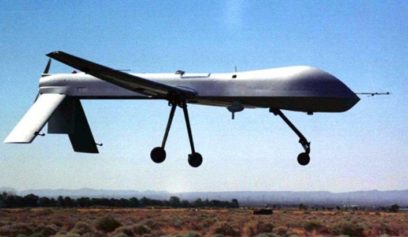
The surprising news about the readiness of the Obama administration to introduce unmanned surveillance drones in the Caribbean in a new strategy to combat the notorious illegal drug trade has come like a virtual fait accompli.
Almost simultaneous with reports out of Washington on Sunday of planned operation of the “drones” project by the US Customs and Border Protection agency, Barbados’ Attorney General and Minister of Home Affairs, Adriel Brathwaite, was enthusiastically embracing this latest development in the US war on drug trafficking.
Given the abomination of the drug culture that continues to create havoc with the lives and economies in too many Caricom states, it may be tempting to also uncritically endorse the initiative.
But such official responses ought to be delayed for some prior information-sharing on the modalities of operations of drones with assurances against misuse of intelligence and technology that could result in the loss of lives.
The announcement came after the US seemingly satisfied itself about the effectiveness of the surveillance drones for the Caribbean with secret trial exercises in The Bahamas.
When and where did consultations with regional governments occur? There was no mention about the drones project in the communiqué issued at the recent Caricom Summit in St Lucia.
Nor was there any allusion to it either by the Community’s Secretary General or current Chairman PM Kenny Anthony. There has been no references to it by the Community’s Prime Ministerial Committee on Crime and Security chaired by PM Kamla Persad-Bissesar.
And it has not yet been discussed for approval at the level of the Regional Security System, according to those who should know.
Representative institutions and organisations in the Caribbean will undoubtedly have an interest to learn whether Caricom governments have been briefed on it.
If so, have they satisfied themselves about its usefulness without compromising the region’s political sovereignty and territorial integrity?
The introduction of drones to intensify the US war against drug-trafficking, has now entered public consciousness in the Caribbean at a critical period.
Read more: Rickey Singh, Trinidad Express