Likud MK Miri Regev, who came under fire last week after calling African migrants “a cancer” in Israeli society, apologized for the first time for her comments on Sunday, opting, however, to leave the migrants out of her apology.
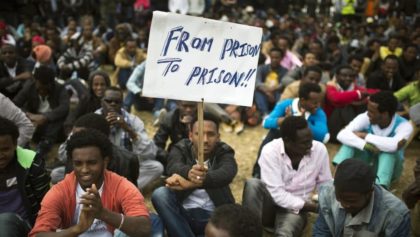
Regev’s controversial comments came during a violent rally staged by residents of Tel Aviv’s south – where many African migrants live – to protest rising crime rates in the area. In the rally, the Likud MK said “the Sudanese are a cancer in our body.”
She was later criticized for inflaming the protesters, with angry demonstrators later going on to attack African passers-by and journalists, breaking into and looting shops associated with the African migrant community and shattering car windshields.
At the time, Regev condemned “any violence from any side, but I understand the rage and hurt of the residents, of the families that live there. They tell us: ‘Help us. We are being humiliated, look how we live, we are afraid to leave the house.'”
However, speaking to Israeli media outlets over the weekend and on Sunday, Regev chose to apologize for calling the Sudanese a cancer, opting however, to direct her apology to Holocaust survivors and cancer patients.
“When I compared the migrant worker phenomenon to cancer I was referring to the way the phenomenon had spread, and not anything else. If anyone took it otherwise and was consequently offended, I apologize and I surely did not intend to hurt either Holocaust survivors or cancer patients,” she said.
Regev told Maariv that she was very “attuned to the issue of the Holocaust. The memory of the Holocaust is seared deeply into my heart back from my time in high school when I prepared a paper on the subject.”
“Up until a year ago I did not set foot in Germany, and made it a point not to purchase German-made products,” the Likud MK and former army spokesperson said, adding: “When I was with an IDF delegation in Auschwitz I didn’t stop crying, and so if someone attributed a wrong interpretation of my comments or was offended by them, I apologize.”
Regev added that “she didn’t talk about people as being cancer but of an infiltration phenomenon that was spreading.”
The Likud MK also added that she was sensitive to the feelings of cancer patients, adding that she was herself involved with the care given to a boy with cancer, telling the website of Israeli daily Maariv that she understands the emotions involved with ta mention of the disease.
“When [former Prime Minister Yitzhak Rabin] said the settlers were a cancer, no one made any fuss. When [Peace Now head] Yariv Oppenheimer speaks of the settlements as caner, everyone is silent. When I talk about the phenomenon, I get attacked just became I’m a leader from the right-wing,” Regev added.
Last week, Prime Minister Benjamin Netanyahu promised that his government would address the issue of African migrants in Israel, one day after a protest against them by residents of south Tel Aviv turned violent.
“The infiltrator problem must be solved, and we will solve it,” Netanyahu said on Thursday afternoon, speaking at an event in Tel Aviv.
He also refered to the construction of a fence on the Egypt-Israel border, saying, “We will complete construction of the fence within two months, and soon we will begin sending infiltrators back to their countries of origin.”
The prime minister also condemned the actions of demonstrators and Knesset members on Wednesday, when demonstrators attacked African migrants in South Tel Aviv.
“I want to make it clear that there is no place for the statements and actions that we witnessed yesterday. I say these things to the public figures and to the residents of south Tel Aviv, whose pain I understand,” he said.
Source: haaretz.com