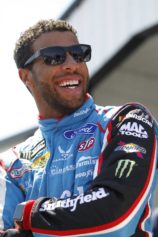
In an effort to attract more black fans, NASCAR is pinning its hopes on an 18-year-old African-American driver named Darrell Wallace Jr., who has been closely watched by racing insiders since he was just 14.
With a fan base whose average age is 51.6, the oldest of any major sport in America, NASCAR is desperate to lure more African Americans to racing so that it doesn’t see its popularity die away with its fans over the next few decades. The way NASCAR officials see it, if they can develop Wallace or any black driver into racing’s Tiger Woods, it will mean more fans—and more money for all involved—for many years to come. That’s why the racing association nine years ago created the Drive for Diversity program, which searches for young minority and female talent. So far the program has not had any breakthroughs.
But everyone is hoping that Wallace can change that. He’s been sponsored thus far first by his dad, who owns an industrial cleaning business and has spent $1 million on his son’s racing career, and lately by the Joe Gibbs racing team, led by the former Washington Redskins coach—who has made it a priority to put a black driver on the NASCAR circuit.
Wallace’s father, Darrell Wallace Sr., is white while his mother Desiree, a former track star at University of Tennessee, is black. He has already endured a considerable amount of racism and fan abuse at the tender age of 18, particularly in the lower level racing events where he had to start. According to the Times, only five blacks have started a race in the 64-year history of NASCAR and just one, Bill Lester, since 1986. Wendell Scott, the subject of the Richard Pryor movie “Greased Lightning,” was the only black driver ever to win a NASCAR race.
Wallace races today at the lower-level Nationwide Series at Iowa Speedway, along with female driver Danica Patrick—who has demonstrated how much a driver can cash in by being an anomaly in a white-male dominated sport. But if NASCAR truly wants to attract more black fans, a black driver may not be enough. It also will have to fight the perception, true or not, among blacks that they will be greeted at the track by a sea of hostile white faces.