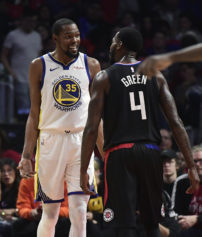
David Stern wants action, not acting.
“Flopping” in the NBA is when a player goes through exaggerated motions to give the impression he was hit harder than he was to dupe the referee into calling a foul on the opposition. This bad acting is more than norm now than the exception, and commissioner David Stern wants to see it controlled.
“I think it’s time to look at (flopping) in a more serious way,” Stern told ESPN, “because it’s only designed to fool the referee. It’s not a legitimate play in my judgment. I recognize if there’s contact (you) move a little bit, but some of this is acting. We should give out Oscars rather than MVP trophies.
In Game 1 on the Miami Heat vs. New York Knicks first-round series, Tyson Chandler was assessed a flagrant foul 1 on league MVP LeBron James after James ran into a well-timed screen by Chandler. There was contact, yes. But the 6-foot-8, 260-pound James acted as he were blindsided by an NFL linebacker. He went stumbling to his side, his arms flailing. His stunt to the court, where he rolled around, grabbing his neck and grimacing as if he had been shot him in the back. Fake.
James is not aone, as several other stars have become prone to “flopping.” Take the Los Angeles Clippers, as an example. They have come under fire as a team for excessive flopping. Memphis Grizzlies forward Zach Randolph claims Chris Paul is to blame, telling ESPN Radio, “It all starts with Chris, because Blake (Griffin) didn’t really used to flop like that.”
Boston’s Paul Pierce is another who goes into a stunt fall or over-the-top stumble most every time there is contact. The game has been cleaned up from the 1990s to where there is no hand-checking and hard fouls are not flagrant fouls. If the floppers have their way, a “foul” will be called on most every play. Expect Stern and the league to come up with something to penalize “floppers.” And rightfully so.