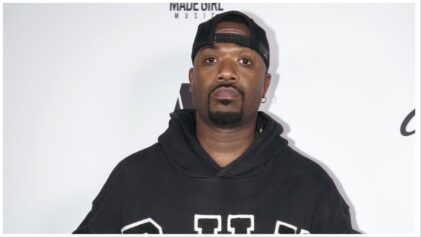
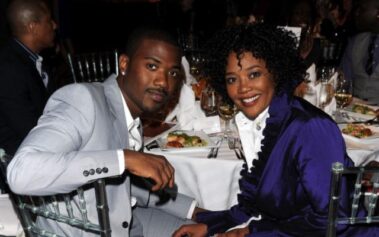
UPDATE-Ray J is being portrayed as a direct perpetrator for the death of legendary singer Whitney Houston by Bobby Brown’s sister Leolah Brown and he is not taking these accusations idly citing the miscalculations as “rife” and “false statements.” Brown was photographed with Whitney days before her death and according to Leolah he gave her a “bad bag” when she spoke to Headline News’ Dr. Drew.
“I saw Ray-J coming out of the hotel hiding his head being pushed into the car. Why is he hiding his face? He’s always trying to show his face when he’s around Whitney.”
She continued, “And I put it all together. When I first heard she passed away I said ‘My God somebody gave her a bad bag.’ And then I saw Ray-J and it all added up.”
As the preliminary autopsy reports were released on Thursday finding the cause of Houston’s death a combination of drowning, heart disease, and cocaine use, fingers are pointing in Ray-J’s direction as the supplier of cocaine the weekend Whitney died.
“Even though Leolah Brown was nowhere near the Beverly Hilton Hotel on the day Whitney Houston died, Ms. Brown falsely claimed that Ray J was at the hotel and contributed to Whitney Houston’s death,” Ray J’s rep says.
“Even the most minimal inquiry with anyone actually in contact with Whitney would reveal that Leolah Brown had been out of contact with Whitney for more than a year.”
According to TMZ, Ray J is perturbed that Brown’s sister would appear on television to make such reckless claims. Though Ray J was spotted with Houston days before she died, he was not near her the day of her death.
“The singer had NO KNOWLEDGE that Whitney was using again,” according to Ray J’s rep.