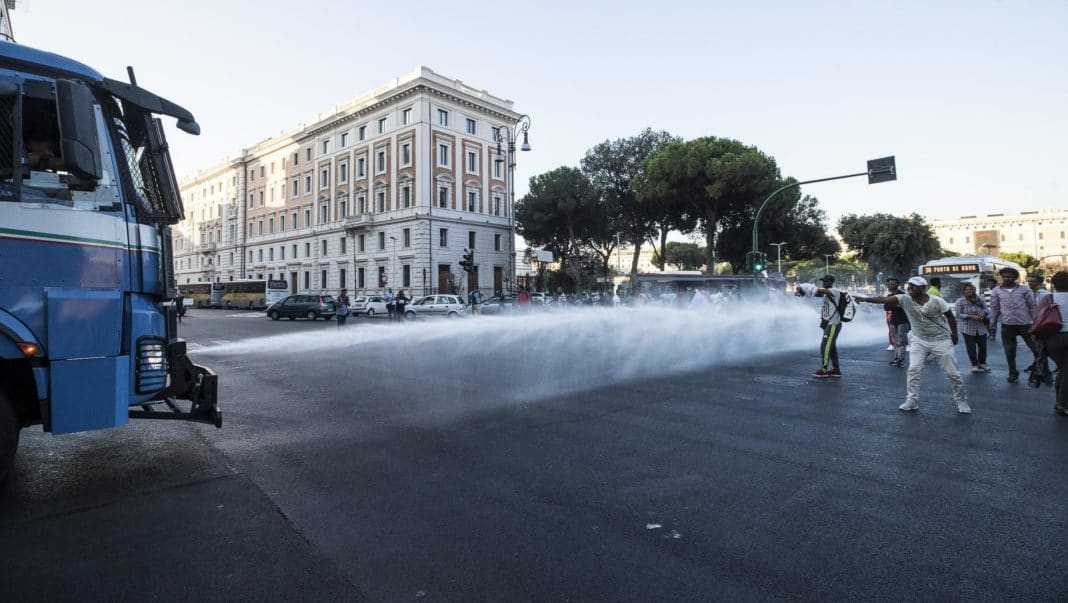
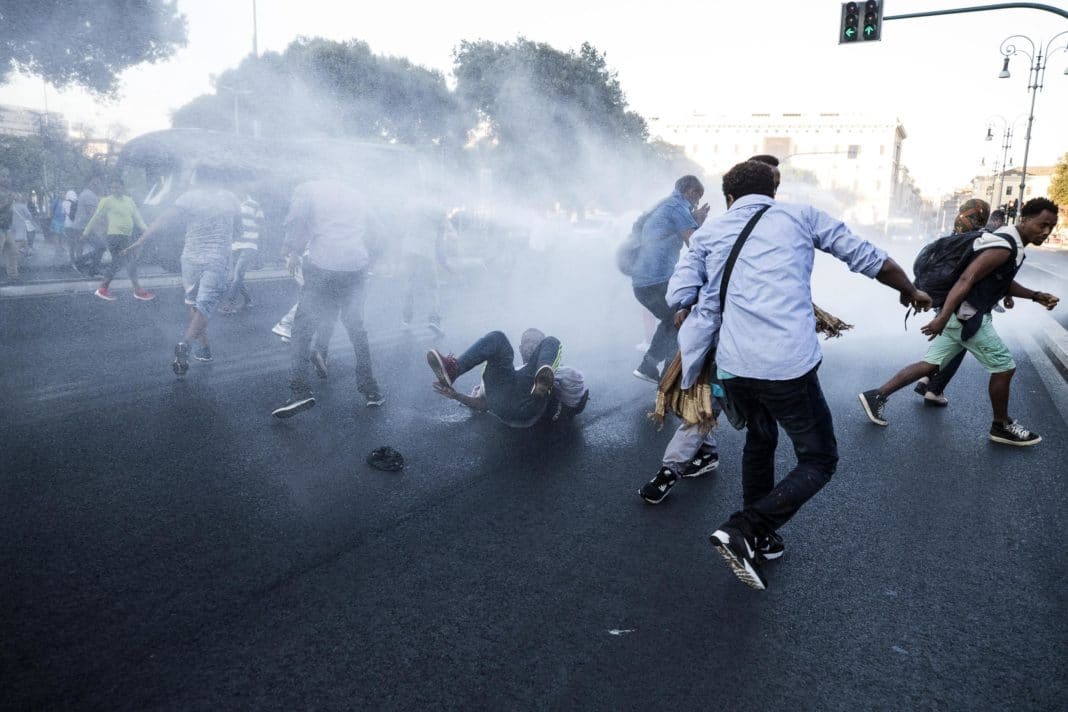
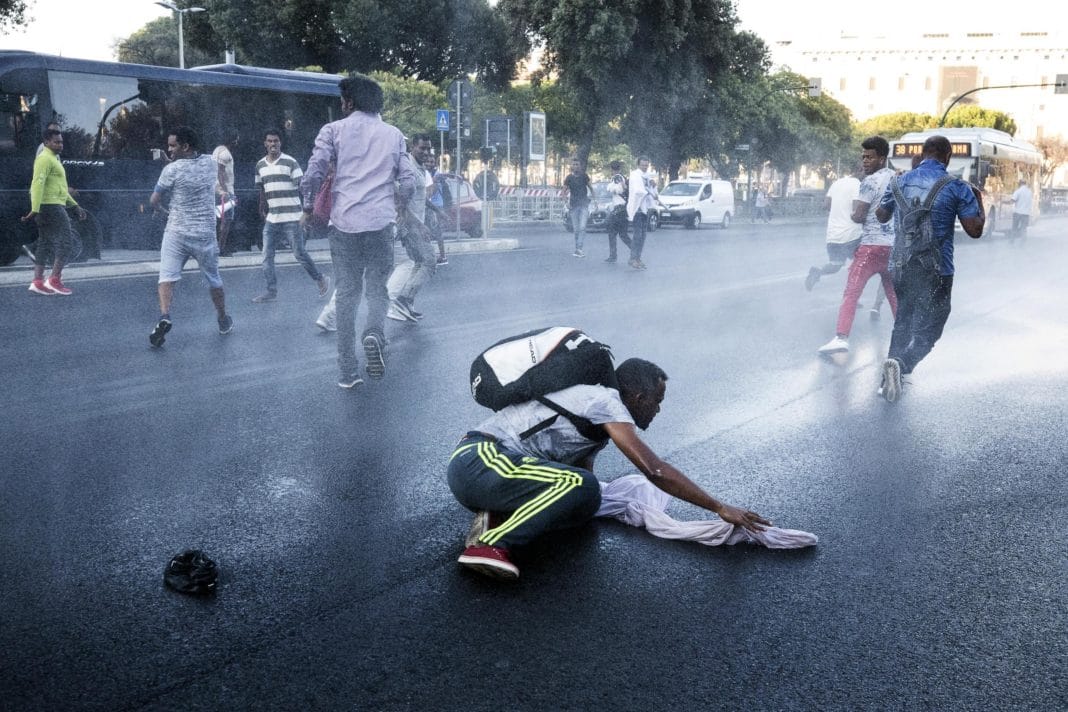
ROME (AP) — Migrants in a Rome piazza threw rocks, bottles and gas cans at riot police using water cannons to clear out about 100 mostly Ethiopian and Eritrean asylum-seekers early Thursday as part of a security operation harshly criticized by humanitarian groups.
At least two people were detained, and 13 were injured.
The dawn operation comes days after authorities cleared most of the 800 migrants who had been squatting in an adjacent building since 2013.
Police said in a statement the operation was necessary because the migrants remaining in the piazza had refused to accept city-organized lodging and because of the risk of cooking gas canisters and other flammable materials.
Authorities have said such raids to clear migrants from buildings and squares, at least four since July in Rome, are part of anti-terrorism measures.
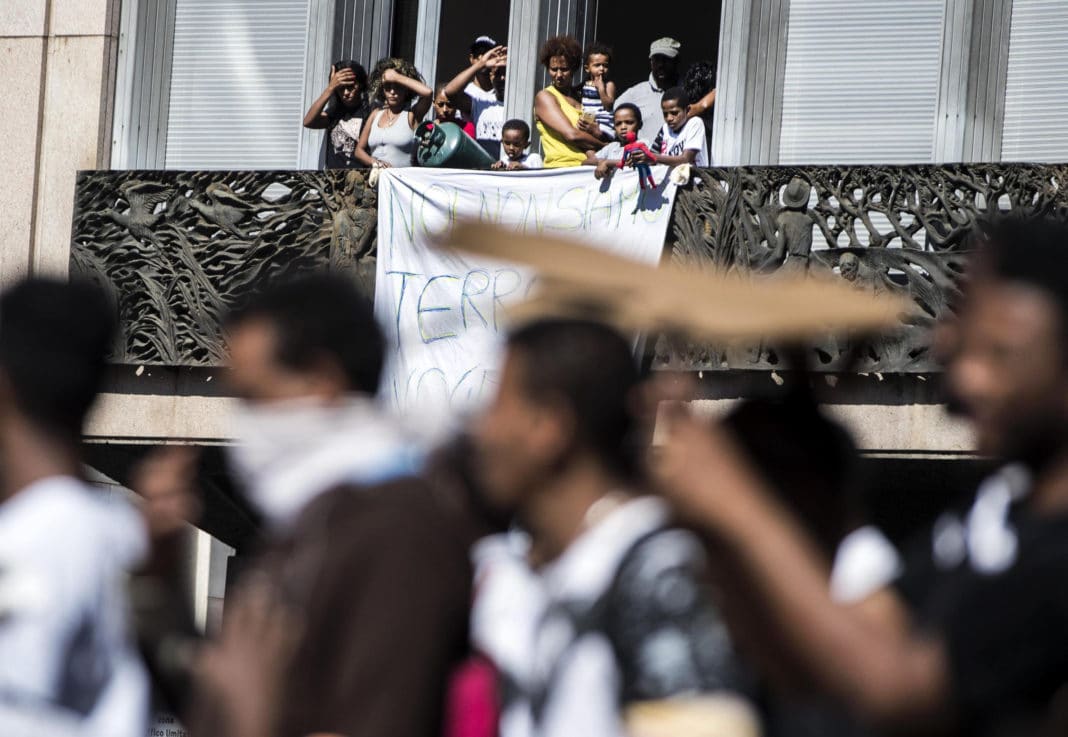
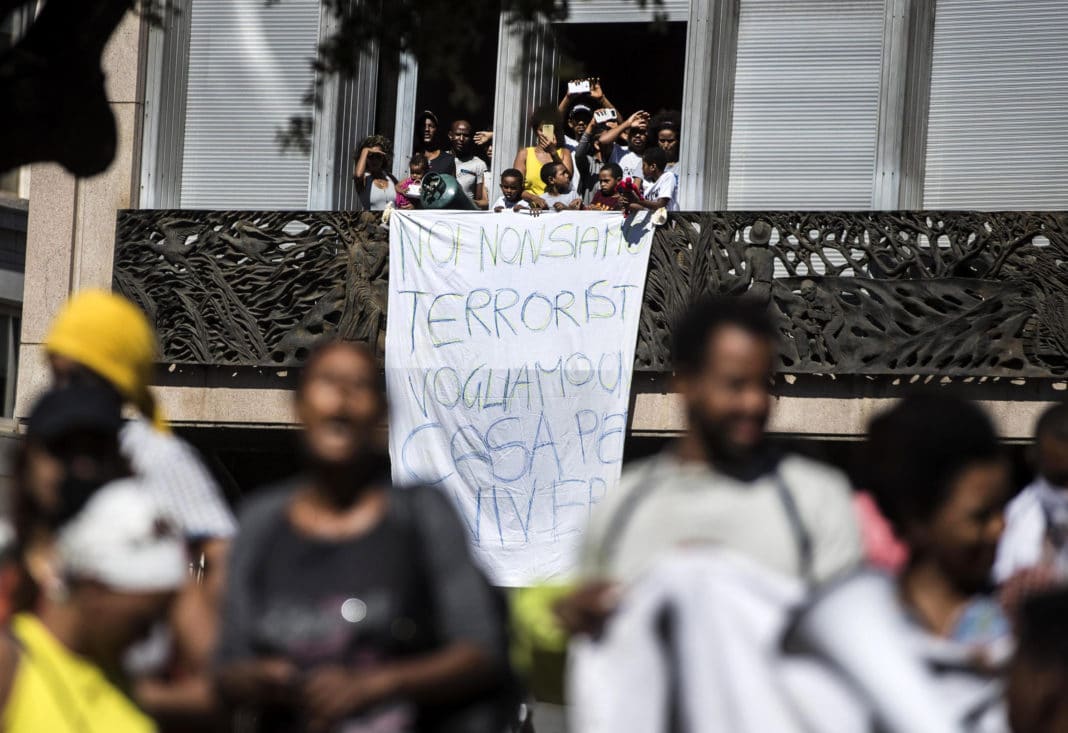
Asylum-seekers, mostly women and children, who had been allowed to remain temporarily in a nearby building hung signs out of its windows saying “We are not terrorists,” as some threw canisters into the street. They were also cleared out, and brought to a police station.
The city of Rome said in a statement that the most vulnerable among the migrants, including families with minors, and the elderly and disabled, were being given priority, and that all had been given food and drinks by authorities. The statement said workers had run into resistance in recent months to conduct a census of migrants living in the structure and piazza.
The U.N. refugee agency, UNICEF and humanitarian organizations have protested Italy’s moves, saying they were carried out without warning and that there isn’t enough adequate housing for them and the hundreds more vulnerable asylum-seekers sleeping on Rome’s streets. They also noted that many families would be separated by the new housing arrangements and children would be uprooted from schools.
“It is a shame that the absence of alternative housing solutions brought about a violent situation,” Doctors Without Borders said, calling for “dignified solutions” for those who have been removed.



UNHCR expressed “extreme concern for the use of force, which could have been avoided if alternative solutions had been identified in a timely fashion and in consultation with the people and families involved.”
A U.N. refugee agency official in southern Europe, Stephane Jaquemet, noted that many of the people living in the building had been there for many years and were legal residents of the capital.
“They are people fleeing war and persecution, already victims of terrible trauma. People who have the right to support to integration in a way to become autonomous,” Jaquemet said.
On Twitter, Doctors Without Borders posted pictures of the police operation and protested the “indiscriminate use of violence.” The organization noted there were no ambulances nearby to help, and said their volunteers treated 13 injured, mostly cuts and fractures, including an elderly woman who fainted after being hit by a water jet.
Italy is struggling to meet the demand to house migrants, with more than 98,000 arriving so far this year after being rescued at sea in rickety smugglers’ boats. More stringent border controls are preventing most of those migrants from continuing their journeys to preferred destinations further north.


