No More Jezebel or Mammy: New Museum Art Exhibit Shatters Stereotypical Depictions of Black Women

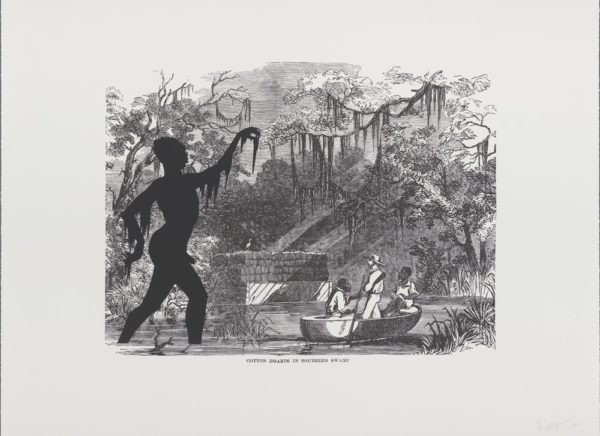
"Harper's Pictorial History of the Civil War (Annotated): Cotton Hoards in Southern Swamp" (Kara Walker. edition 21/35, 2005 offset lithography and screenprint 39 x 53 in. 2005.339k)

“Harper’s Pictorial History of the Civil War (Annotated): Cotton Hoards in Southern Swamp” (Kara Walker, edition 21/35, 2005 offset lithography and screenprint 39 x 53 in. 2005.339k)

A new art exhibit at Louisiana’s Alexandria Museum of Art is breaking down the stereotype of the strong Black woman, thanks to contributions from Black female artists. Rather than depicting women who affirm that two-dimensional trope, these works showcase Black women with fully developed personalities who fully experience lived emotions.

According to the gallery’s website, the exhibit “Beyond Mammy, Jezebel, & Sapphire: Reclaiming Images of Black Women” features work from the Jordan Schnitzer Family Foundation curated jointly by the InterDisciplinary Experimental Arts Space at Colorado College and the AMoA. Each work in the showcase unpacks the stereotypes of the angry, emasculating Sapphire, the overtly sexual Jezebel and the selflessly nurturing Mammy. In doing so, each idea is disproved in images.

"Why Can't We Just Sit Down And Talk It Over, edition" (Mickalene Thomas 39/40, 2006 screenprint image: 19 1/2 x 30 inches, frame: 24 x 35 inches 2007.417)

“Why Can’t We Just Sit Down And Talk It Over” (Mickalene Thomas, edition 39/40, 2006 screenprint image: 19 1/2 x 30 inches, frame: 24 x 35 inches 2007.417)

Mickalene Thomas’s “Why Can’t We Just Sit Down And Talk It Over” features a woman who may typically be seen as the Jezebel, but instead, she rests calmly with her shirt casually unbuttoned as she gazes crosslegged.
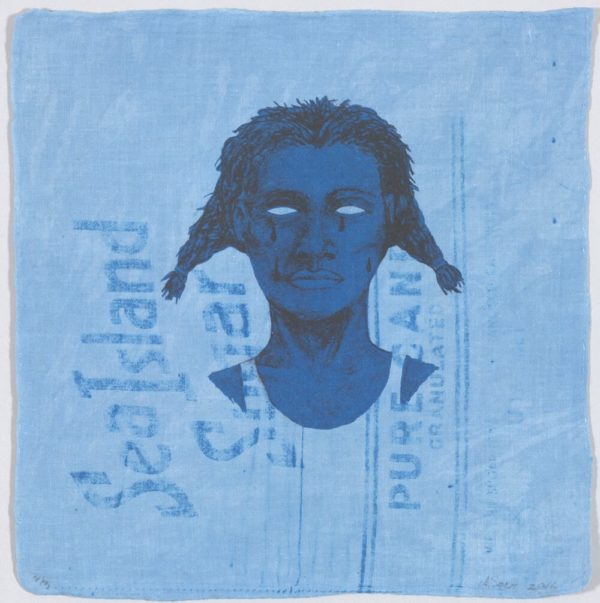
"Indigo Blue (Sea Island Pure)" (Alison Saar, edition 2/3, 2016 intaglio 12 x 11 3/4 in. 2016.90)

“Indigo Blue (Sea Island Pure)” (Alison Saar, edition 2/3, 2016 intaglio 12 x 11 3/4 in. 2016.90)

In Alison Saar’s piece, “Indigo Blue (Sea Island Pure),” it showcases a break from the strong black woman trope as the woman is covered in tears and her apperance is devoid of makeup.

The “Beyond Mammy, Jezebel, & Sapphire: Reclaiming Images of Black Women” exhibit is on display at AMoA now through Feb. 18. It will also be on display at Colorado College beginning March 27.

Still independent.

We hope this story was worth your time. For over 14 years, Atlanta Black Star has stayed Black-owned and independently run. We didn't get here by waiting on ad budgets that were never built to prioritize us. Our readers did that.

Corporate support for Black media has always been thin. Outlets like ours get roughly 1% of the $170 billion spent on U.S. advertising each year, and that margin is shrinking further as advertisers walk back the DEI-linked commitments they made in 2020. That's the backdrop. It's not why we're asking.

The wider picture isn't any steadier. Newspaper ad revenue has fallen more than 80% since 2005, and local newsrooms are closing at a rate of roughly two a week nationwide. When outlets go under, it's rarely the ones built to center a Black perspective from the ground up that get to stick around.

We know a request for support isn't why you came here. But without readers choosing to fund this work directly, the depth of reporting we can do at home and abroad shrinks along with everyone else's. If you're not in a position to give, that doesn't change how much we value you as a reader.

If you are able to, a recurring contribution does more for us than a single one-time gift, because it lets us plan the next investigation instead of just the next invoice. It takes about 30 seconds, no long form, no account. Thank you for continuing to support independent journalism and freedom of the press.

Back to top