Flicker
The Caribbean Development Bank’s board of directors has approved a grant of (U.S.) $3.5 million to pay Haiti’s catastrophe risk insurance premium for the coming year.
This marks the fourth year that CDB has provided a grant for the full payment of Haiti’s premiums on earthquake, tropical cyclone and excess rainfall policies.
A news release from the CDB said the approved grant covers insurance for the period June 1, 2016 to May 31, 2017.
Given Haiti’s fragility and high vulnerability to natural hazards, the CDB committed to paying its annual Caribbean Catastrophe Risk Insurance Facility premiums, as part of the CDB country partnership strategy for Haiti for the period 2013-2016.
Haiti and other member countries of CCRIF, the world’s first multi-country catastrophe risk pooling facility, benefit from sovereign insurance at affordable rates. Through CCRIF, countries receive timely, rapid cash payments after catastrophic earthquakes, hurricanes or excess rainfall events, which significantly impact their national economies.
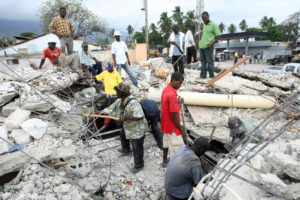
Haiti is still recovering from the impact of the 2010 earthquake, which caused more than 300,000 deaths, displaced over three million people, and made more than one million homeless.
As of January 2016, approximately 45,000 Haitians were still living in tents and makeshift shelters, with little or no access to water and sanitation.
The grant is reportedly being paid under the Eighth Cycle of the Special Development Fund, the focus of which includes promoting environmental sustainability and climate change resilience.
Haiti formally became a member of the bank in January 2007.
Read more here.


