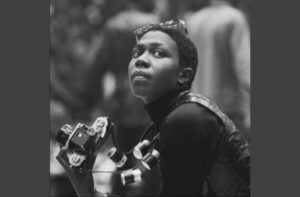
Afeni Shakur. Facebook
Members of the National Alumni Association of the Black Panther Party (NAABPP) released an official statement in memory of philanthropist, activist and former Panther, Afeni Shakur.
Known worldwide as the mother of iconic rapper Tupac, Shakur died Monday in Sausalito, Calif. She was 69.
The statement reads:
We are deeply saddened by the passing of our sister Afeni Shakur.
Afeni was a sister, mentor, comrade and leader within the New York chapter of the Black Panther Party. As the section leader of the Harlem branch, Afeni was the one who personally welcomed many of us into the party. As the communications secretary, she was one of the highest ranking members on the East Coast and her leadership was the reason many young women joined.
Afeni had a deep and profound love for the community and a passion for the people that made her a dynamic organizer and dedicated activist. She embodied the spirit of what it meant to be a Black Panther, waking up at 5AM to cook for the free breakfast program, coordinating the day to day office duties and personally being in the field.
Afeni’s organizing laid the seeds for a legacy we still bear witness to today. While working with tenant organizations, Afeni led numerous rent strikes, resulting in several tenant owned buildings, some of which still exist today. She was instrumental in organizing health care professionals and patients at Lincoln Hospital and Harlem Hospital to develop the first patient bill of rights, a fore runner of the patient bill of rights now posted in every hospital.
After the Black Panther Party, Afeni continued her work in the community as a paralegal helping save hundreds of families from eviction and criminal convictions. She left an everlasting impact on the community and the arts world with her life long contributions that will never be forgotten.
We send our deepest condolences and heartfelt sympathy to Sekyiwa, Jean and the entire Shakur family. We ask that young people everywhere continue Afeni’s legacy by lifting up her name and continuing to organize in their communities wherever they see injustice.
We Love you dear sister Afeni. Long live your revolutionary spirit!
All Power To The People!
Reflections from several Black Panther alumni followed.
From Jamal Joseph, former Black Panther incarcerated alongside Shakur as one of the Panther 21, now a full professor at Columbia University.
“Afeni Shakur was not a Panther who was an activist. She was an activist who became a Panther and energized the Black Panther Party with her love of the community and her incredible organizing skills. She mentored and taught young Panthers and young people across the country. She is truly a mother of the hip-hop generation and an inspirational light to the artist movement”
Yasmeen Sutton, former Black Panther and current treasurer of the NAABP. Sutton is actively working to exonerate Panthers still in prison.
“Afeni, herself was a poet. So when we heard TuPac’s poetry, for those of us who knew Afeni, it made sense that this young man who had grown up around the Black Panther Party with a mom who was an artist, would become a talented artist himself. It was her poetic nuances that gave her the ability to craft her moving piece, ‘A Letter to My Unborn Child,’ while on trial in the Panther 21 case.”
Pam Hannah, former Black Panther. Set to appear in The Black Panthers: Portraits from an Unfinished Revolution, a collection of photographs, interviews and literature commemorating the party’s 50th anniversary.
“Afeni was the reason I joined the Black Panther Party. She helped form how I gave service to the people, the community and the party. It was an interaction I had with her after a young brother was shot that forever changed how I saw my participation. Because of her words, from that moment on it became my business when something happened in the community. To this day it still informs how I act. While TuPac was on trial, she would go support him all day and come back and still have so much energy to care about how we each were doing. I really appreciated her ability to give of herself even when under direst. That is the type of person Afeni was.”