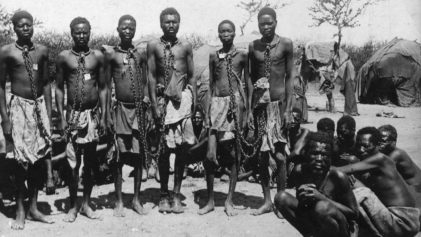
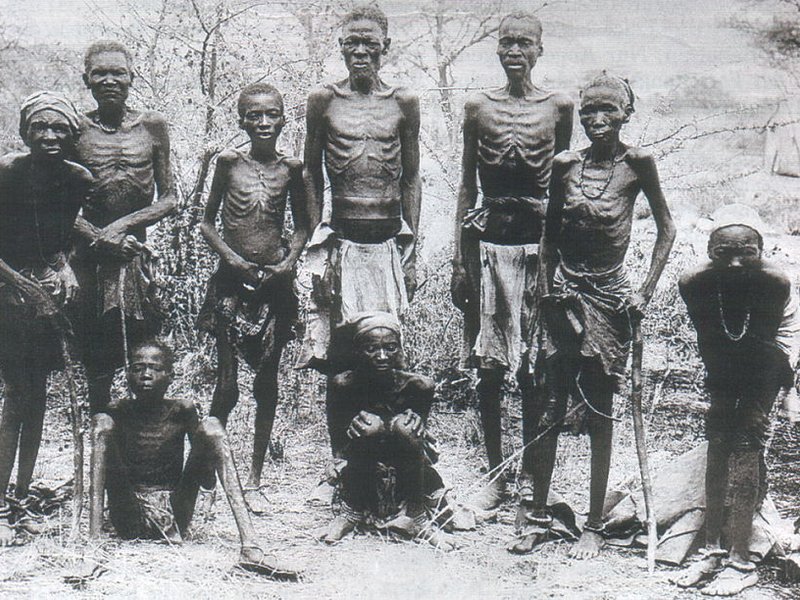
 As a teenager in the 1960s, Israel Kaunatjike joined the fight against apartheid in his native Namibia. He couldn’t have known that his activism would take him across the globe, to Berlin—the very place where his homeland’s problems started
Back then, Europeans called Kaunatjike’s home South-West Africa—and it was European names that carried the most weight; tribal names, or even the name Namibia, had no place in the official taxonomy. Black and white people shared a country, yet they weren’t allowed to live in the same neighborhoods or patronize the same businesses. That, says Kaunatjike, was verboten.
A few decades after German immigrants staked their claim over South-West Africa in the late 19th century, the region came under the administration of the South African government, thanks to a provision of the League of Nations charter. This meant that Kaunatjike’s homeland was controlled by descendants of Dutch and British colonists—white rulers who, in 1948, made apartheid the law of the land. Its shadow stretched from the Indian Ocean to the Atlantic, covering an area larger than Britain, France, and Germany combined.
“Our fight was against the regime of South Africa,” says Kaunatjike, now a 68-year-old resident of Berlin. “We were labeled terrorists.”
During the 1960s, hundreds of anti-apartheid protesters were killed, and thousands more were thrown in jail. As the South African government tightened its fist, many activists decided to flee. “I left Namibia illegally in 1964,” says Kaunatjike. “I couldn’t go back.”
He was just 17 years old.
Kaunatjike is sitting in his living room in a quiet corner of Berlin, the city where he’s spent more than half his life. He has a light beard and wears glasses that make him look studious. Since his days fighting apartheid, his hair has turned white. “I feel very at home in Berlin,” he says.
Which is a bit ironic, when you consider that in the 1880s, just a few miles from Kaunatjike’s apartment, the German Kaiser Wilhelm II ordered the invasion of South-West Africa. This makes his journey a strange sort of homecoming.
The battle that Kaunatjike fought as a teen and arguably still fights today, against the cycle of oppression that culminated in apartheid, began with a brutal regime established by the German empire. It ought to be recognized as such—and with help from Kaunatjike, it might.
Read the full story at smithsonianmag.com