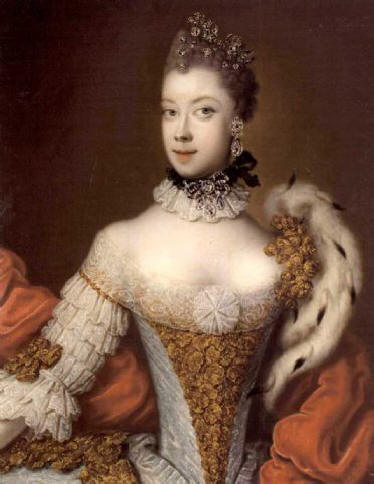
Queen Charlotte, England’s First Black Queen
Early Years
According to EnglishMonarchs.co.uk, Sophia Charlotte of Mecklenburg-Strelitz was born on May 19, 1744 in Morow, Germany. She was the child of Duke Charles Louis Frederick of Mecklenburg-Strelitz and Elizabeth Albertine. Queen Charlotte was directly descended from Margarita de Castro y Sousa, a Black branch of the Portuguese Royal House.
Although intelligent, Charlotte was reported to have received a very mediocre education. Her father, Duke Charles, died when she was but eight-years-old, and was succeeded as Duke of Mecklenburg-Strelitz by her half-brother Adolphus Frederick III.
Her Portrait and Features
Portraits of Queen Charlotte came under much scrutiny as evidence of her African ancestry were to be hidden, especially in paintings of her. Painters such as Sir Thomas Lawrence, who painted Queen Charlotte in the autumn of 1789, had their paintings rejected by the royal couple who were not happy with the representations of the likeness of the Queen.
Mario de Valdes y Cocom, a historian of the African diaspora, wrote that “the Negroid characteristics of the Queen’s portraits certainly had political significance since artists of that period were expected to play down, soften or even obliterate undesirable features in a subject’s face.” Sir Allan Ramsay was the artist responsible for the majority of the paintings of the Queen and his representations of her were the most decidedly African of all her portraits.
She was often described as small and thin with a dark complexion and flared nostrils. Queen Charlotte’s personal physician, Baron Stockmar, described her in his autobiography, as having “a true mulatto face”.
Her Reign
African-American registry notes that Queen Charlotte’s letters indicate that she was well read and had interest in the fine arts. The Queen is known to have supported and been taught music by Johann Christian Bach. Wolfgang Amadeus Mozart, at age eight dedicated his Opus 3 piece to the Queen at her request. Queen Charlotte helped to establish Kew Gardens, bringing among others, the Strelitzia Reginae, a flowering plant from South Africa.
Queen Charlotte’s legacy continues to live on. The city of Charlotte in North Carolina is named after Queen Charlotte and nicknamed The Queen City. Additionally, the Queen Charlotte Maternity hospital was established in London.