New Non-Profit Aims to Increase the Number of Black Engineers in the Tech Industry

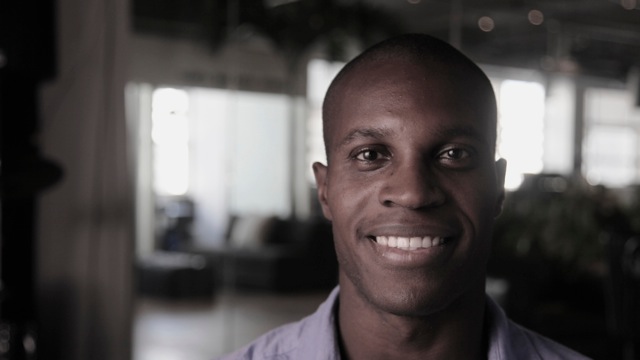
Founder Makinde Adeagbo

Founder Makinde Adeagbo

According to USA Today, the amount of Black engineers at Facebook and Google is only 1 percent. Managing software engineer, Makinde Adeagbo, is accustomed to the lack of diversity in the tech industry.

As a Pinterest engineer, Adeagbo realizes that the diversity problem will not go away without significant change. The irony is that Pinterest and Twitter have been addressing their diversity problem by seeking the help of Paradigm, a company that specializes in diversity training. This process is a first step toward diversity but it isn’t the quickest.

So Adeagbo decided to take matters into his own hands. His company /dev/color is a non-profit organization that provides Black engineers with the connections and skills needed to start and stay in the industry. In a blog post, Adeagbo shares the story behind his company, stating that /dev/color started after he mentored a gifted college student who had interned at major tech companies and wanted more guidance about a career in software engineering.

The company started this summer as a tool and resource that would ultimately help advance Black engineers into leadership roles in their respective companies.

The organization emphasizes the need for mentorship and networking in a industry where there are few Black engineers. In order to reach as many people as possible, /dev/color will be  joining Black Girls Code, Code 2040 and the Hidden Genius Project to attack the diversity problem head on.

For more information, visit /dev/color.
Democracy needs journalism it can trust.

This election season, the stakes are higher than usual — and so is the pressure on newsrooms to soften their coverage, stay quiet, or just disappear. Independent reporting, the kind that answers to readers instead of advertisers or political pressure, matters more in a moment like this, not less.

For over 14 years, Atlanta Black Star has stayed independent and reader-funded. We have no corporate owner and no shareholders telling us what to cover or how to cover it. That independence is also our biggest vulnerability: nothing protects it except readers choosing to fund it directly.

Newspaper ad revenue has fallen more than 80% since 2005, and local newsrooms are closing at a rate of roughly two a week nationwide. When outlets go under in a moment like this, it's rarely the independent, reader-funded ones that get to stick around.

We know a request for support isn't why you came here. But without readers choosing to fund this work directly, the depth of reporting we can do at home and abroad shrinks along with everyone else's. If you're not in a position to give, that doesn't change how much we value you as a reader.

If you are able to, a recurring contribution does more for us than a single one-time gift, because it lets us plan the next investigation instead of just the next invoice. It takes about 30 seconds, no long form, no account. Thank you for continuing to support independent journalism and freedom of the press.

Back to top