Reuters
A new study shows unions are a major benefit for Black workers. A report by the City University of New York’s (CUNY) Murphy Institute for Worker Education and Labor Studies showed union jobs had a smaller wage gap between Black and white employees than non-union jobs.
The report showed Black unionized workers made an average of $21.62 per hour, while non-Black unionized workers made $24.04 per hour. However, the wage gap between Black and white non-unionized workers was much greater. Non-unionized Black workers made an average of $13.65 per hour, while non-unionized white workers made $17 per hour, a 20 percent pay difference.
Collective bargaining tends to benefit all workers, said CUNY sociologist Ruth Milkman, who co-authored the Murphy Institute report.
“Unions tend to negotiate both a higher floor and a lower ceiling in terms of wages, so that’s the main thing,” Milkman said.
Black people tend to be aware of the benefits of unions and more favorable towards them than white Americans. An April Pew report showed 60 percent of Black people had positive views of unions. Only 45 percent of white Americans reported the same.
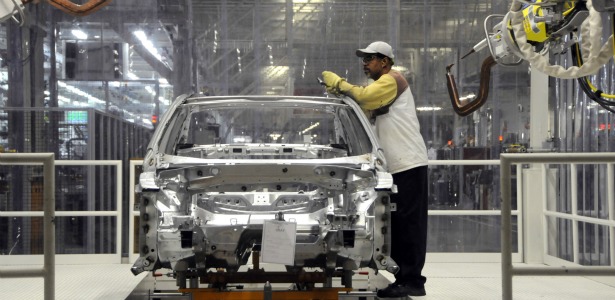
It’s not surprising Black workers have a more positive view of unions. Union jobs at Northern manufacturing plants drew Black workers out of the South, and enabled Black people to create a thriving middle class. Those jobs paid for homes, cars and children’s college educations. Black workers have suffered as those jobs have been exported to foreign countries or Right-to-Work states, which are hostile to labor. Auto manufacturing jobs have disappeared from the Northwest, devastating cities like Detroit, and are now located in the South. However, jobs that used to pay about $25 per hour, are now going for about $17 per hour. An NPR article reported that there has been a huge drop in union membership nationwide—50 years ago a third of American workers belonged to a union, but now that number is one in 10.
There is a stark difference between the political parties when it comes to union membership. Democrats are generally in favor of unions, often counting on support from public employee, labor and teacher’s unions. Several Democrats made pro-labor speech on Labor Day or appeared at labor rallies.
Republicans, on the other hand, are hostile towards union and blame them for pushing up wages and driving away jobs. When Volkswagen tried to open a plant in Tennessee, Republican politicians tried to put in legislation that mandated the jobs had to be non-union, even though that made the Chattanooga site the only non-union Volkswagen plant in the world.
In addition, Wisconsin Gov. Scott Walker led a successful fight to strip the power of public employee unions in his state, and New Jersey Gov. Chris Christie has said he wanted to “punch the teachers’ union in the face.”
However, faced with stagnating wages and poor working conditions, American workers may be gaining a new appreciation for the power of unions. Employees at media companies VICE, Gawker and Salon have all formed unions. And Fortune reports that digital workers at Al Jazeera recently approved a petition to join the News Guild of New York, which is part of the Communication Workers of America union.
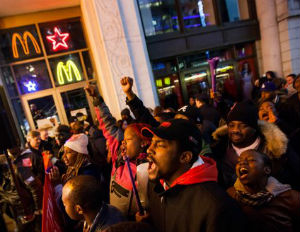
Fortune also suggests that the nationwide fight to increase fast-food workers’ pay to $15 per hour made many employees realize the power of collective bargaining. Even Walmart, which is notorious for its anti-union stance, is facing more challenges from employees wanting to form unions.