South Africa
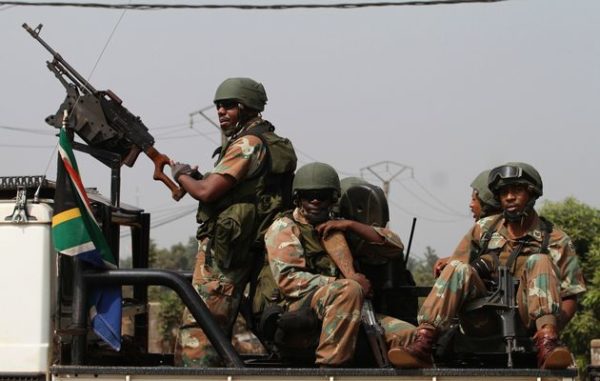
Developed out of the white apartheid regime desire to keep the South African Blacks under military repression, the South African arms industry is considered one of the most advanced in the non-Western world today, on par with fellow IBSA partners, India and Brazil. The wide-ranging locally-made weapons—some of which were categorized as crowd-control equipment—included transport and attack helicopters, armored personnel carriers, military trucks, internal security vehicles, assault rifles and hand guns.
Although weapons production has slowed considerably since the official end of apartheid, Pieter Wezeman, senior researcher, Arms Transfers Program at the Stockholm International Peace Research Institute, says the South African arms industry has advanced in a few niche areas such as certain light armored vehicles and anti-tank missiles. The country’s weaponry and other military equipment are in high demand in many countries throughout the world, from the United States to China, and from Sweden to Zambia.

via bravoministries.wordpress.com
Ethiopia
A report released by Agence France-Presse (AFP) confirms that Ethiopia is home to perhaps one of the most powerful armies in Africa. Though weapon production began in the 1800s under Emperor Tewondros, today, the country also has a pretty lucrative industry pertaining to weapon production. Ethiopia produces small arms, rifles and grenades propelled by rockets. According to the AFP report, Ethiopia has a defense budget of roughly $400 million dollars.