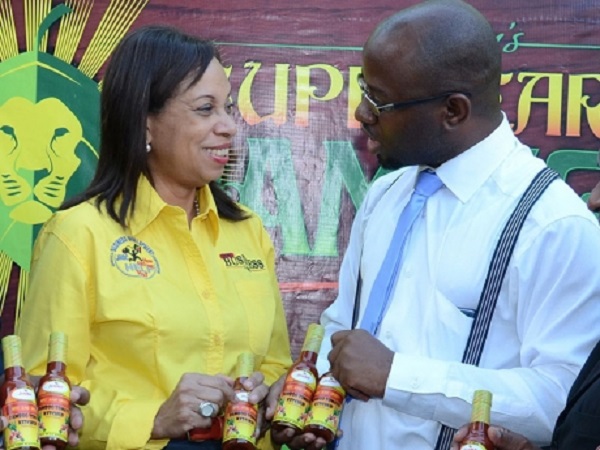
Local bamboo ketchup made in Jamaica is now available on the market.
The Bamboo Tomato Ketchup was developed by university graduate and head of Jamdun’ Food Processing, Chevaughn Bowen.
Several other value added products are being considered by the Bamboo and Indigenous Materials Advisory Council, spearheaded by the Bureau of Standards Jamaica (BSJ).
Bowen says he got the idea to make the bamboo tomato ketchup while in discussion with Gladstone Rose, Director of Special Projects at the BSJ, and head of the Government’s bamboo program.
He then went to China to look at that country’s bamboo industry, and to do further expert research on the properties in the bamboo edible shoots.
After returning, Bowen began producing the bamboo ketchup.
The young innovator, who copped the 2010 Jamaica Manufacturers’ Association top prize for his hot and spicy barbe‐fry sauce, says young people who have innovative business ideas should ensure that they are written down and placed in the marketplace for development.
“Idea on paper is no idea at all. Putting a prototype together, and trying to get it out there in the market is best. Your idea sitting on paper, it makes no sense. I believe that everybody coming from university should have that state of mind, to become innovative,” he told the JIS.
For State Minister in the Ministry of Industry, Investment and Commerce, Sharon Ffolkes-Abrahams, the bamboo ketchup is the first of its kind in the world, offering a number of vitamins.
“This is one of the products for diversification,” she said.
“There are several things that we can do with bamboo… there is bamboo pharmaceutical, the bamboo charcoal, bamboo flooring, furniture, bamboo to feed animals, and the bamboo fabric that is in demand, fetching a high price on the world market,” she said at the recent opening of the first bamboo charcoal factory, in Pembroke Hall, St. Mary.
Source: The Gleaner