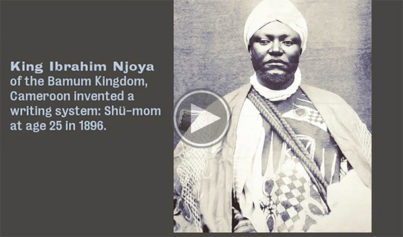
11 Ancient African Writing Systems That Demolish the Myth That Black People Were Illiterate

The importance of oral culture and tradition in Africa and the recent dominance of European languages through colonialism, among other factors, has led to the misconception that the languages of Africa either have no written form or have been put to writing only very recently.

However, Africa has the world’s oldest and largest collection of ancient writing systems. The evidence dates to prehistoric times and can be found in multiple regions of the continent.

By contrast, continental Europe’s oldest writing, Greek, was not fully in use untilroughly 1400 B.C. (a clay tablet found in Iklaina, Greece) and is largely derived from an older African script.

The oldest Asian writing, proto-cuneiform, dates to around 3000 B.C. (clay texts found at Jemdet Nasr). However, the oldest known African writing systems are several centuries older.

Here are 11 African writing systems you should know about to dispel the myth that Africans were illiterate people.
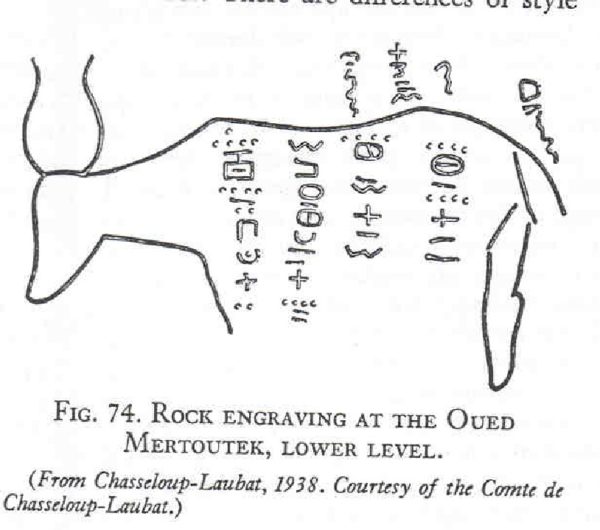
 

Oued Mertoutek engravingProto-Saharan (5000–3000 B.C.)

Dr. Clyde Winters, author of “The Ancient Black Civilizations of Asia,” wrote that before the rise of the Egyptians and Sumerians there was a wonderful civilization in the fertile African Sahara, where people developed perhaps the world’s oldest known form of writing.

These inscriptions of what some archaeologists and linguists have termed “proto-Saharan,” near the Kharga Oasis west of what was considered Nubia, may date back to as early as  5000 B.C.
Democracy needs journalism it can trust.

This election season, the stakes are higher than usual — and so is the pressure on newsrooms to soften their coverage, stay quiet, or just disappear. Independent reporting, the kind that answers to readers instead of advertisers or political pressure, matters more in a moment like this, not less.

For over 14 years, Atlanta Black Star has stayed independent and reader-funded. We have no corporate owner and no shareholders telling us what to cover or how to cover it. That independence is also our biggest vulnerability: nothing protects it except readers choosing to fund it directly.

Newspaper ad revenue has fallen more than 80% since 2005, and local newsrooms are closing at a rate of roughly two a week nationwide. When outlets go under in a moment like this, it's rarely the independent, reader-funded ones that get to stick around.

We know a request for support isn't why you came here. But without readers choosing to fund this work directly, the depth of reporting we can do at home and abroad shrinks along with everyone else's. If you're not in a position to give, that doesn't change how much we value you as a reader.

If you are able to, a recurring contribution does more for us than a single one-time gift, because it lets us plan the next investigation instead of just the next invoice. It takes about 30 seconds, no long form, no account. Thank you for continuing to support independent journalism and freedom of the press.

Back to top