10 Facts About The Arab Enslavement Of Black People Not Taught In Schools

slave arab

The Number of People Enslaved

The number of people enslaved by Muslims has been a hotly debated topic, especially when the millions of Africans forced from their homelands are considered.

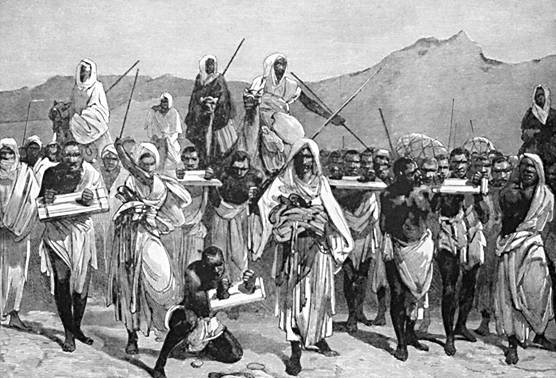
Some historians estimate that between A.D. 650 and 1900, 10 million to 20 million people were enslaved by Arab slave traders. Others believe over 20 million enslaved Africans alone had been delivered through the trans-Saharan route alone to the Islamic world. Dr. John Alembellah Azumah estimates in his 2001 book “The Legacy of Arab-Islam in Africa” that over 80 million more Black people died over that route.
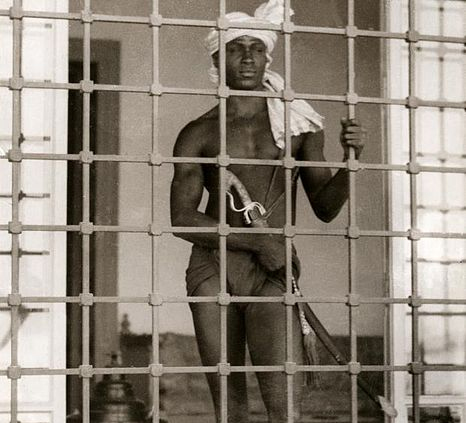
 

castrated african guarding harem in tunis

Arab Enslavers Practiced Genetic Warfare

The Arab slave trade typically dealt in the sale of castrated male slaves. Black boys between the age of 8 and 12 had their scrotums and penises completely amputated to prevent them from reproducing. About six of every 10 boys  bled to death during the procedure, according to some sources, but the high price brought by eunuchs on the market made the practice profitable.

Some men were castrated to be eunuchs in domestic service, and the practice of neutering male slaves was not limited to only Black males. “The calipha in Baghdad at the beginning of the 10th Century had 7,000 black eunuchs and 4,000 white eunuchs in his palace,” writes author Ronald Segal in his 2002 book “Islam’s Black Slaves: The Other Black Diaspora.”


Democracy needs journalism it can trust.

This election season, the stakes are higher than usual — and so is the pressure on newsrooms to soften their coverage, stay quiet, or just disappear. Independent reporting, the kind that answers to readers instead of advertisers or political pressure, matters more in a moment like this, not less.

For over 14 years, Atlanta Black Star has stayed independent and reader-funded. We have no corporate owner and no shareholders telling us what to cover or how to cover it. That independence is also our biggest vulnerability: nothing protects it except readers choosing to fund it directly.

Newspaper ad revenue has fallen more than 80% since 2005, and local newsrooms are closing at a rate of roughly two a week nationwide. When outlets go under in a moment like this, it's rarely the independent, reader-funded ones that get to stick around.

We know a request for support isn't why you came here. But without readers choosing to fund this work directly, the depth of reporting we can do at home and abroad shrinks along with everyone else's. If you're not in a position to give, that doesn't change how much we value you as a reader.

If you are able to, a recurring contribution does more for us than a single one-time gift, because it lets us plan the next investigation instead of just the next invoice. It takes about 30 seconds, no long form, no account. Thank you for continuing to support independent journalism and freedom of the press.

Back to top