Invasion, Theft, Rape, Murder: The Aboriginal Holocaust in Tasmania

WLLLIAM LANEY

THE LAST TASMANIANS

With the steady decrease in the number of Aborigines, white people began to take a bizarre interest in the Blacks, whom whites believed “to be a missing link between humans and apes.”

In 1859 Charles Darwin’s book, On the Origin of Species, popularized the fantasy of biological (and therefore social) evolution, with whites at the top of the evolutionary scale and Blacks at the bottom, the Aborigines were portrayed as a group of people “doomed to die out according to a natural law, like the dodo, and the dinosaur.” This is during the same period in the United States that it was legally advocated that a Black man had no rights that a white man was bound to respect.

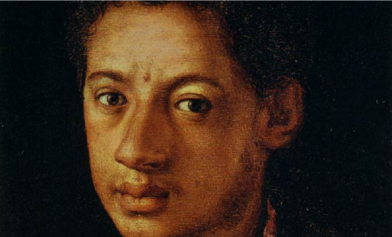
William Lanney, facetiously known as King Billy, was the last full-blood male Tasmanian. He was born in 1835 and grew up on Flinders Island. At the age of 13,  Lanney was removed with the remnant of his people to a concentration camp called Oyster Cove.  Ultimately he became a sailor and some years he went whaling. As the last male Tasmanian, Lanney was regarded as a human relic. In January 1860 he was introduced to Prince Albert. He returned ill from a whaling voyage in February 1868, and on March 2, 1868, he died in his room at the Dog and Partridge public-house in Hobart, Tasmania.

Democracy needs journalism it can trust.

This election season, the stakes are higher than usual — and so is the pressure on newsrooms to soften their coverage, stay quiet, or just disappear. Independent reporting, the kind that answers to readers instead of advertisers or political pressure, matters more in a moment like this, not less.

For over 14 years, Atlanta Black Star has stayed independent and reader-funded. We have no corporate owner and no shareholders telling us what to cover or how to cover it. That independence is also our biggest vulnerability: nothing protects it except readers choosing to fund it directly.

Newspaper ad revenue has fallen more than 80% since 2005, and local newsrooms are closing at a rate of roughly two a week nationwide. When outlets go under in a moment like this, it's rarely the independent, reader-funded ones that get to stick around.

We know a request for support isn't why you came here. But without readers choosing to fund this work directly, the depth of reporting we can do at home and abroad shrinks along with everyone else's. If you're not in a position to give, that doesn't change how much we value you as a reader.

If you are able to, a recurring contribution does more for us than a single one-time gift, because it lets us plan the next investigation instead of just the next invoice. It takes about 30 seconds, no long form, no account. Thank you for continuing to support independent journalism and freedom of the press.

Back to top