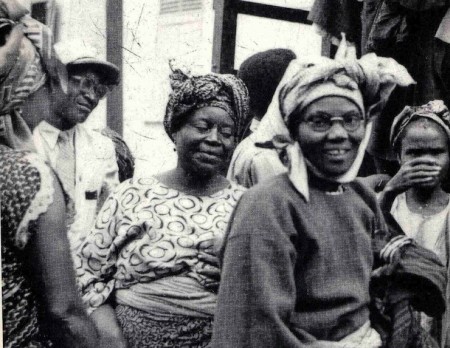
Funmilayo Ransome-Kuti (October 25, 1900 – April 13, 1978
Kuti was a teacher, political campaigner, and women’s rights activist who headed the Abeokuta Women’s Union (AWU) in southwest Nigeria. The purpose of the union was to organize the working class market woman and the middle class women against both colonial rule and the patriarchal structure.
In Abeokuta, located in southwest Nigeria, colonial taxation by the British emerged as an unfair practice that predominantly targeted women. Nearly a year after numerous proposals to the Egba King (Alake of Egbaland), Oba Ademola II were met with little change, Kuti lead thousands of women in protest in the Abeokuta Women’s Revolt outside of the king’s palace.
The response from the colonial authorities was brutal. The police force utilized tear gas and beatings on the women.
Despite the dangerous circumstances, the AWU continued to protest and released a document called the AWU’s Grievances in 1947 that detailed all their accusations against the Alake and the SNA. Following the list of grievances, the women once again held a demonstration outside the Alake’s palace from November 29, 1947, until the morning of November 30. There were over ten thousand women in attendance.
In the end, their demands were met, leading to the abdication of the King in 1949, the SNA system was changed, and four women had positions in the new system of administration.
Ransome-Kuti’s political activism led to her being described as the doyen of female rights in Nigeria and was regarded as “The Mother of Africa.” These uprisings were among the earliest campaigns against British rule in Nigeria and West Africa during the colonial era.
Kuti was the mother of the world’s celebrated musician, King of Afrobeats and political activists Fela Anikulapo Kuti.


