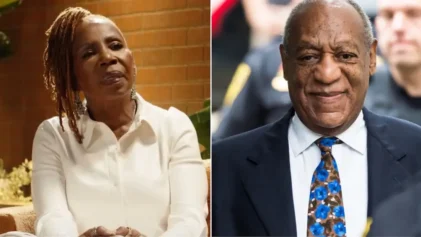
Like so many later-comedians, Bill Cosby described himself in school as “the class clown.” Born in 1937, William Henry Cosby worked at several different jobs growing up, including selling produce, stocking shelves in a supermarket, and apprenticing in a shoe repair store. He served four years in the U.S. Navy and later entered Temple University on a track and field scholarship. (He also played fullback on the Temple football team.)
While at Temple, Cosby started working as a bartender to supplement his income. Realizing he had a knack for making the customers laugh while serving them drinks, Cosby decided to pursue a career as a stand-up comedian.
In 1963, he received his first national exposure with an appearance on “The Tonight Show.” In 1964, he recorded the first of his now-classic comedy albums, “Bill Cosby is a Very Funny Fellow….right!“
By 1965, Cosby was one of the hottest nightclub comics in America. Enter writer/actor Robert Culp, who had written a script where he was to star as a James bond-style secret agent. Culp brought the script to producer Carl Reiner, who told him to show it to producer Sheldon Leonard, who was developing a new series called “I Spy.” Leonard soon signed Culp to star in his new “spy series” as spy and “tennis bum,” Kelly Robinson, and now set about to find Culp a co-star.
The co-starring character in “I Spy” was named Alexander Scott and was originally intended to be an older, mentor-type character- oh yes, he was also supposed to be Caucasian. But one night, after catching the stand-up comedy act of Cosby, Leonard’s fertile mind started percolating. He felt Bill Cosby would be perfect in the role of Alexander Scott.
Of course, nowadays, the solution would be simple: just hire Cosby. But this was 1965 and the times were a bit different. If Cosby was hired, this would be the first time in the history of television that a black American would co-star in a dramatic series.
Showing courage and foresight, as well as a keen sense of talent, Leonard threw caution to the wind and hired the popular stand-up comic, who had, at this time, never acted professionally in his life. Premiering on September 15, 1965, “I Spy” was an immediate hit, and the 28-year-old Cosby took to acting like the proverbial fish to water.
In an early episode, “Danny was a Million Laughs,” guest actor Martin Landau made a racial joke at Cosby’s expense. Both Culp and Cosby bristled at the crude “humor” and insisted no racial references would ever be made again on the show; for the rest of the show’s run, that’s exactly what happened. Both agreed that “our statement is a non-statement,” Culp later recalled…
Read More: todayifoundout.com