Pete Hegseth returned to Marine Corps Base Quantico this week with a sweeping message about the state of America’s military, but it wasn’t his new initiatives or readiness warnings that got some viewers talking.
The 46-year-old Army National Guard veteran addressed roughly 600 enlisted leaders and junior officers during his “State of the Force” speech, nearly a year after pushing tougher fitness requirements, tighter body-fat standards and a crackdown on shaving waivers.
But as Hegseth touted what he described as a tougher, more disciplined military, some viewers found themselves scrutinizing whether the man delivering that message looked like he was meeting the same standard.
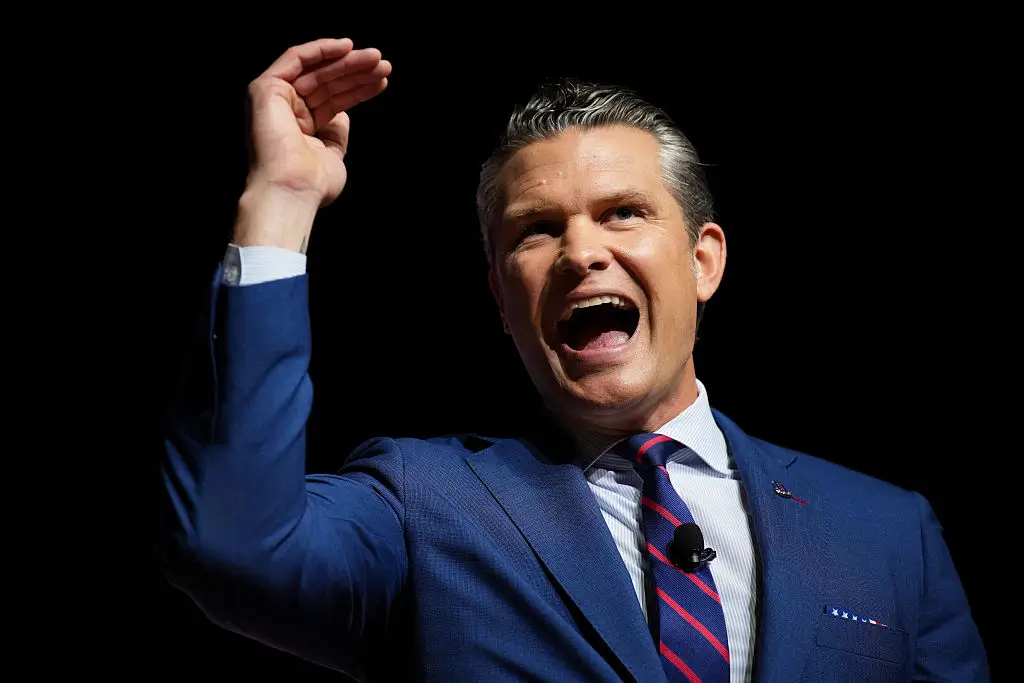
But for a man who once declared, “We’re going to be fit, not fat,” the photos coming out of Quantico were bound to invite a closer look.
Once those images began circulating online, the conversation took a turn.
Critics zeroed in on the fit of Hegseth’s dark suit. Some claimed he looked heavier than he did when he first took over the Pentagon. Others simply wondered why his clothes appeared so snug. Social media had a field day, teasing him.
“Why can’t any of these jokers find a suit that fits ?” one Threads user wrote. Another snapped, “He dresses like PeeWee Herman.”
“He looks particularly dorky here,” a third person joked. Another critic focused on his footwear, writing, “Look at those brown shoes he never takes off.”
“Goodwill did not his have his size in stock,” someone else added.
The comments echoed another round of online teasing Hegseth faced in June 2026. A photo of him posing with Kyle Rittenhouse began circulating after Rittenhouse shared the image online. Critics quickly zoomed in.
Hegseth was wearing a green suit in the picture. The jacket appeared tight around his midsection and arms. That was enough for critics to claim he had packed on some pounds. Others wondered whether he could still pass the fitness standards he has championed for service members.
The tailoring had drawn attention before. Hegseth previously attended a Kennedy Center premiere with his wife, Jennifer Rauchet, wearing a fitted blue suit. Photos showed his jacket pulling around the middle. Another snug suit spotted around the same period kept the chatter going.
Of course, photographs cannot prove that Hegseth has gained significant weight. Camera angles, posture and tailoring can dramatically change how someone’s body appears.
Still, the jokes carry an extra sting because Hegseth has made physical fitness a major part of his Pentagon agenda.
In September 2025, Hegseth stood before senior military leaders at Quantico and complained about overweight troops. He was even tougher on military leadership.
“Likewise, it’s completely unacceptable to see fat generals and admirals in the halls of the Pentagon and leading commands around the country and the world,” Hegseth said. “It’s a bad look. It is bad, and it’s not who we are.”
His Pentagon followed that message with tougher fitness expectations. Hegseth pushed twice-yearly physical fitness tests. He also emphasized stricter height, weight and body-fat requirements.
He has repeatedly presented himself as someone willing to meet the same standards.
Last year, Hegseth joined Health and Human Services Secretary Robert F. Kennedy Jr. for the “Pete & Bobby Challenge.” The workout called for 100 push-ups and 50 pull-ups.
That was when Hegseth delivered the line now following him into every photo critics believe shows a little extra around the middle.
“We’re going to be fit, not fat,” he declared.
Nearly a year later, Hegseth’s fitness crackdown remains in place. So does the internet’s habit of inspecting the man enforcing it.
When you make “fit, not fat” part of your public brand, the internet is going to remember the slogan every time the buttons start looking a little too busy.
View on Threads


