Trumpets, trombones, tubas and French horns have suddenly landed in the middle of a national-security trade fight alongside industrial products, leaving critics to question how school band instruments became a threat to the United States.
For now, the trumpets remain legal, the tubas are still playing, and no tariff has taken effect. But the debate over whether they belong in a national-security fight is already making plenty of noise.
The proposed 25% tariff is part of President Donald Trump’s broader effort to use national security as a justification for expanding tariffs on products made with metals such as copper, aluminum and steel.
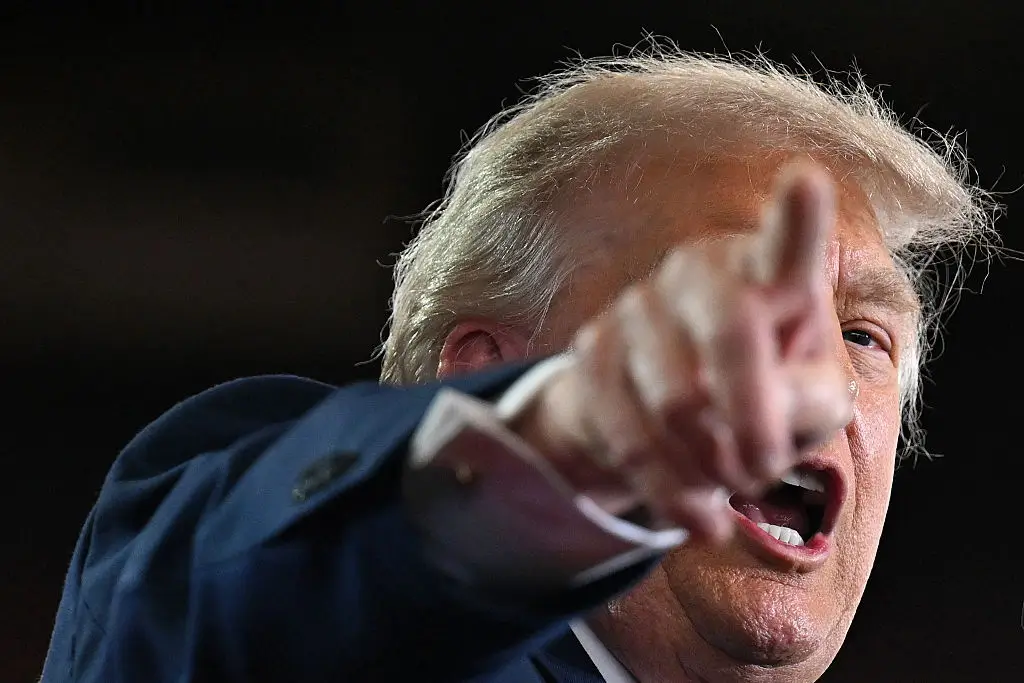
But by putting brass instruments on the list, the administration has drawn ridicule from critics who say the policy stretches the concept of national security to the point of absurdity — and could make it harder for families, schools and music programs to afford the instruments that introduce millions of children to music.
The Commerce Department announced Aug. 6 that it is considering brass-wind instruments, along with certain parts and accessories, among 14 categories for additional tariffs under Section 232 of the Trade Expansion Act. The law allows the president to impose tariffs on imports deemed to undermine national security.
The import tax is not yet in effect. The government is accepting public comments through Aug. 27 before making a final determination.
The administration argues the issue is not that a trumpet or tuba itself threatens national security. Rather, officials say imported products made predominantly from metals considered important to national defense can weaken domestic demand for American-made materials and undermine the U.S. industrial base.
A White House official told The Washington Times that focusing on musical instruments was “missing the point” of the tariffs, arguing that tariffs on raw metals could be circumvented by simply shipping finished products into the country.
“The inclusion of these derivative products ensures that domestic production does not get undercut at another point in the supply chain,” the official said.
Critics remain unconvinced.
“I keep thinking of the ’Music Man’ song, ’76 trombones’ are invading,” said Wayne Winegarden, a senior fellow in economics at the Pacific Research Institute, according to the Times. “The sheer silliness of applying national security to musical instruments reveals that this administration just wants tariffs on products and they are willing to get them any way they can.”
The proposal could also hit families and schools at a particularly sensitive point in the year, when students are signing up for band programs and retailers are preparing for the back-to-school rush.
The National Association of Music Merchants, or NAMM, has strongly opposed including brass instruments in the proposed tariffs.
“It makes no logical sense that any musical product would be a national security risk,” NAMM CEO & President John Mlynczak told the Times. “In fact, the opposite is true. Music making has been one of the most culturally uniting activities for thousands of years.”
“The amount of brass and copper we are using to make music products is inconsequential. As important as our industry is, when you actually look at the pure amount of materials in an industry of our size, it’s fractions of a fraction of a fraction of a percent.”
NAMM says more than 25 million children participate in school music programs. The organization argues that affordable imported instruments are often the first step for students who later become customers for more expensive professional instruments.
“The American professional instrument market is only as strong as the student market that feeds it,” Mlynczak said in testimony referenced by the organization.
The financial impact could be significant. A 25 percent tariff on a $500 imported trumpet would add $125 to the importer’s cost before shipping, distribution and retail markups. The final price increase could vary depending on how much of the tariff manufacturers, importers and retailers absorb.
Winegarden warned that higher costs could ultimately hurt schools and taxpayers.
“Kids can have less access to an important development experience, or you can have higher costs in schools, and that does lead to higher taxes,” said Winegarden. “You’re diverting more resources into purchasing equipment, which puts higher costs on the economy and that’s detrimental to [economic] growth.”
The United States imported nearly $119 million worth of brass instruments in 2024, with China accounting for roughly $54 million, Japan $37 million and Taiwan more than $16 million.
Existing tariffs have already affected the market. The effective tariff rate on all musical instruments reached 16.6 percent in the first quarter of 2026, according to the Peterson Institute for International Economics, while musical-instrument imports have fallen 9 percent from last year and 20 percent from 2024. Brass imports were down as much as 27 percent compared with 2025.
The proposal has sparked a wave of online criticism.
One critic joked, “A trumpet in the wrong hands can be a weapon of Brass Destruction.”
Another wrote, “Trump has definitely lost all sense of reality. USA you really do need to take action.”
Others reacted with disbelief at the national-security argument.
“In today’s edition of ‘You Can’t Make This Sh-t Up,’ we’re now declaring brass instruments a national security threat. In a six-page memo outlining a push for tariffs on metals, the words ‘national security’ were used nine times. Seriously, WTF with this guy?!?”
Another commenter offered a sharp assessment: “He is batsh-t crazy and dumb as a rock.”
Someone else wrote, “Well, Trump declaring brass instruments a national security threat was definitely not on my bingo card, but I am shockingly unsurprised.”
Another critic tied the proposal to Trump’s broader use of tariffs, saying, “Trump is a f—king moron, reason 458,820,005,143 … Trump administration declares brass instruments a national security threat. Why? So he can tariff without Congressional approval.”
One final reaction summed up the bewilderment surrounding the proposal: “Are you f-cking nuts taking awy brass instruments. Somebody wake him up.”


