Massachusetts school officials are investigating a fifth-grade teacher who held a mock slave auction in class that involved students of color and said the N-word while reading a book that didn’t contain it.
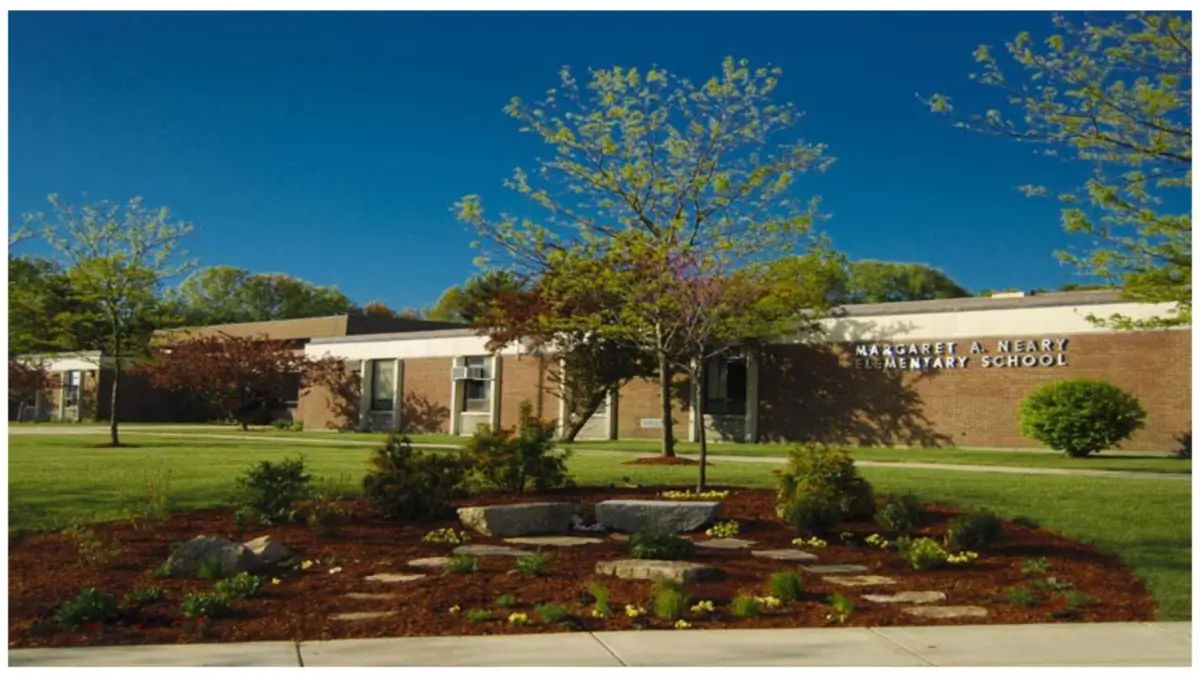
Gregory Martineau, the Superintendent of The Public Schools of Northborough and Southborough, sent parents a letter explaining two incidents involving an unidentified teacher at Margaret A. Neary School.
The first incident happened in January during a lesson on the economy of Southern colonies, which included slavery, according to the letter. At some point, while slave auctions were being discussed, the teacher held an impromptu auction.
“The educator asked two children sitting in front of the room, who were of color, to stand, and the educator and class discussed physical attributes (i.e., teeth and strength),” the letter states.
Then, in April, during a reading of the 2018 novel “The Parker Inheritance,” that same teacher used the N-word. Martineau said the book wasn’t approved for the curriculum and doesn’t contain the N-word, but the teacher said it anyway.
School officials allowed parents and the students in class when the auction was staged and the slur was said to meet with the educator. The objective was to be “transparent with families,” and take “responsibility for mistakes,” Martineau wrote.
The day after that meeting, the teacher told administrators which student reported him for using the N-word, which the district said was unacceptable.
The teacher remains on paid administrative leave while officials investigate both incidents. The school system also placed the school’s principal, Kathleen Valenti, on a 10-day paid administrative leave which ended May 16.
Martineau said the district plans to employ several measures to “improve cultural competency.”
One parent, who is also a teacher, told WBUR that her child came home the day the teacher said the N-word and told her what happened.
“Never was I expecting the N-word to come out of his mouth,” Meghan Cifuentes told the outlet. “If you’re going to use that word with 10 and 11 years olds, there needs to be a heavy discussion of what the word is, why it was used and what it means — just some background information.”
“It’s unacceptable,” another parent told Boston 25 News. “I mean the point is that if it wasn’t in the book why was it even said?”
“This is so disgusting and I now wonder if my daughter dealt with this in the school when she was there,” one parent wrote on Facebook. “Cause it’s a predominantly white town and when I’ve had issues They just dismissed it.”
The Public Schools of Northborough and Southborough are composed of three districts — Northborough, Southborough, and Northboro-Southboro, all of which have predominantly white student makeups.
Southborough serves more than 1,300 students, nearly 63 percent of which are white, while only 1 percent are Black. More than 1,600 students are enrolled in Northborough schools and 64 percent of them are white, while less than 3 percent are Black. At Northboro-Southboro, 68 percent of close to 1,200 students are white and only 2 percent are Black.
Neary Elementary School, which is part of the Southborough district, teaches close to 250 students in the fourth and fifth grades. The school is located about 30 miles outside of Boston.
News of these incidents at Neary comes just a few months after six middle school students at another Massachusetts school in the town of Southwick were charged after staging a mock slave auction in a Snapchat group in which they bullied their Black peers, according to authorities.


