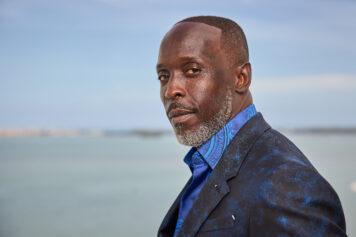
New details about Michael K. Williams’ private and difficult battle with substance abuse have come to light. In the Emmy Award-nominated actor’s upcoming posthumous memoir, “Scenes From My Life,” Williams revealed how one of his most iconic roles led him to relapse.
Williams, then 35 years old, had all but given up on his dream to make it in the acting business when the opportunity came for him to play shotgun-toting Baltimore thief Omar Little on HBO’s critically acclaimed crime drama “The Wire.”
“At the Omar audition, I was so beat down emotionally. That’s the most ironic thing. That f–k the world attitude helped get me the part,” he writes in an exclusive excerpt of the posthumous memoir, co-written by Jon Sternfeld, obtained by People.
The role fueled his sobriety, the star shared. “Shooting in Baltimore for season 1, I was as sober as I’d ever been, barely even smoking weed. I treated the job like my life depended on it because, in some ways, it did,” he continued. “By that age, I’d been on the addiction/relapse merry-go-round enough to know how things could unravel once drugs entered the picture.”
Still, it proved an uphill battle for the actor, who admitted, “A director calling ‘cut’ doesn’t erase what you’re feeling. Your mind feels the fictional the same way it feels the real.”
He added, “That’s the flip side of getting into a character; you wake up that sleeping beast. I meditate on painful things all day long for a scene, and when it’s over, it’s little wonder I’m tempted to go off and smoke crack.”
The show’s success offered Willaims a better lifestyle. The outlet reported that by season two, the actor had been promoted to a series regular with better pay. He was getting more money and paid whether he appeared in an episode or not. The New York native shared that he now had “more money and more time on my hands,” which meant “My demons had room to play.”
Williams said, “On days I wasn’t shooting, I started getting high on crack and cocaine again until I was completely broke.” When season two wrapped, he could no longer afford the rent on that “beautiful apartment,” an upscale Baltimore brownstone.
Other instances included working on another HBO hit, “Lovecraft Country,” the sci-fi horror drama set in the 1950’s Jim Crow era. Williams said his portrayal as Montrose Freeman, a Black man who survived the 1921 Tulsa Race Massacre, “put me through the wringer, mentally and emotionally.”
He ultimately “got into therapy and Narcotics Anonymous meetings, reconnected with my sponsor and addressed my trauma head-on,” he said.
The efforts proved too late after the actor was discovered in his Brooklyn, New York, penthouse apartment unresponsive from an accidental overdose last September. He was 54 years old.