
Netflix’s highly anticipated film “The Harder They Fall” is similar to like many previous movies in the Western genre. It’s got cowboys, sheriffs, horses, and many, many, guns. However, it’s the director’s spin on the movie that started and kept the viewers talking.
For starters, it was a majority-Black cast, which is not something one typically sees in Westerns; there’s also a clever plot embedded in the storyline, but what really sparked a conversation in people’s homes and Twitter feeds is the choice in casting.
This spaghetti western had a star-studded cast that featured the likes of seasoned actors like Idris Elba, Delroy Lindo, and Regina King. Then there are the new-ish stars like Jonathan Majors, Lakeith Stanfield, Danielle Deadwyler, and Zazie Beetz, who all played major characters.
While the cast excited a lot of fans to tune in, and the film ultimately got a lot of praise, including an 86 percent on Rotten Tomatoes, there of course was criticism and it was Beetz whose name got thrown into the majority of it.
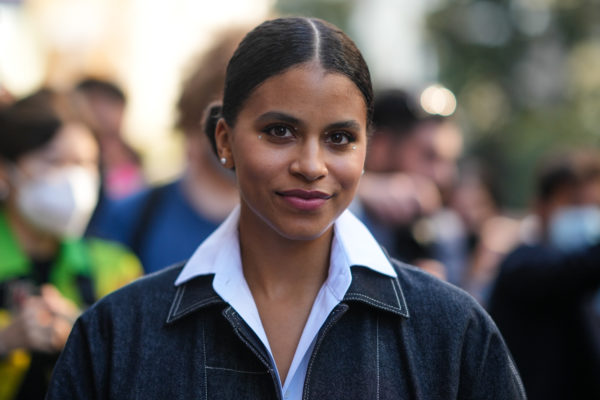
The German-American actress is mainly known for her role in FX’s show “Atlanta” as Vanessa Keefer, but in this movie she portrayed Stagecoach Mary, a tough mail carrier who carried a rifle as a threat to mail thieves. While Keefer’s portrayal of Mary was correct on her carrying the rifle and being resistant, those were the only real similarities between the real Mary and the fictional one.
The real Mary was a plus-sized woman, who appeared to have shorter hair and a darker skin complexion. Keefer’s representation was light-skinned and thin, with long hair. Hollywood has been called out many times by Black people for wiping away Black history, culture, and faces from their films. Sometimes, when there is representation of the Black existence it is been told in a “lighter” fashion.
Many of Hollywood’s works have put darker-skinned Black people — especially women — on the back burner and instead have given lead roles, love interest roles, or sometimes any roles in general to lighter-skinned women. With this being a major issue in history, viewers spoke out about what they saw as inappropriate casting, and although many of the actors did not resemble their characters, it was Beetz who took the bulk of the backlash.
The actress finally spoke out on Nov. 7 about her critics’ opinions to the U.K. newspaper The Times, and she’s making it clear that the issues of colorism and accepting this role are not something she takes lightly.
“This is something that I think about a lot and consider when contemplating any role that I take,” Beetz said. “I understand the privilege that I have as a light-skinned woman and it’s always on my mind.”
“I have, multiple times, turned down roles because I felt I wasn’t the correct choice for the character. At the time when I read this script, almost all the other cast members had already signed on.”
The 30-year-old said the fictional foundation of the script is what made her feel more comfortable in portraying someone like Stagecoach Mary. “I could see that the characters were largely based on fiction and not truly on their historical counterparts and that none of the characters actually bore much physical likeness to the actors that played them. … I saw it as a wonderful opportunity to explore an iconic genre, the spaghetti Western, and make it something new.
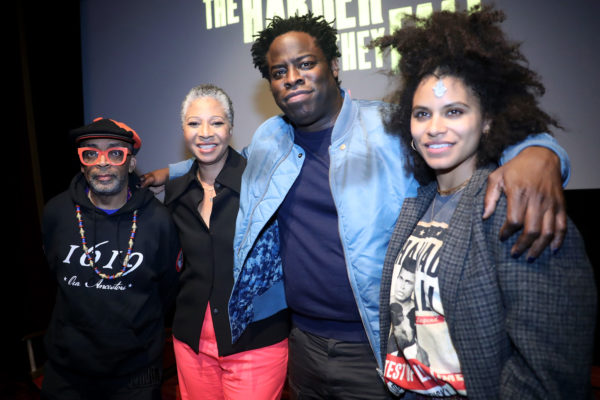
Being of mixed race, Beetz said, “I struggled with it in terms of not feeling like I’m either identity fully.” She added that she has questioned, “‘Am I not Black enough” before, but it was her mother’s reassurance that gave her the confidence in her identity. “She taught me that my existence doesn’t have to be validated by anybody. I’m Black enough, because I am black.”
Jeymes Samuel director of the film also responded to his audience about their concerns of colorism. He told Business Insider that he would tell the critics: “Thank you. They’re not complaining — they are making a point, right? And it’s a beautiful point. They make it well. I would say to them: I’m not making a biopic.”
Continuing to respond with positivity he said, “It’s a beautiful thing because they are doing exactly what I wanted everyone to do for years — bring up images of these people and go ‘Look, here’s the real thing! Here’s the real person. We existed.’”


