Ashley Nicolette Frangipane, better known by her stage as Halsey, is candidly speaking out about growing up biracial. During a recent interview, the singer-songwriter admitted to benefiting from being a very fair-toned Black person.
While speaking to Allure for its August issue, the “Walls Could Talk” singer, whose mother is white and father is Black, revealed that often people would try to “write off” her experiences because of her features.
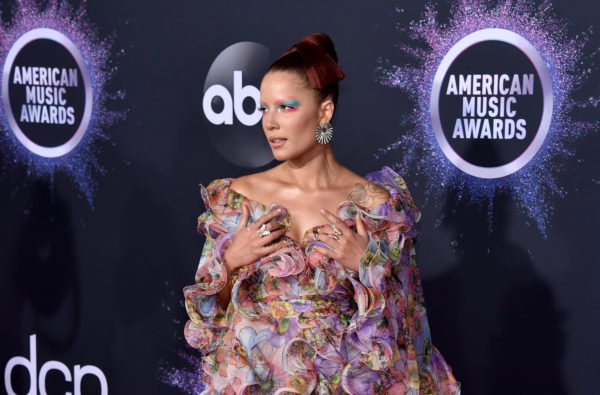
“A lot of people try to write off a lot of my experiences because I present white,” they say. However, Halsey is very aware of the struggles she’d face had she not presented herself as white. “No matter how many tears I’ve shed because I’m not connecting with my family or my culture in a way that I would like to, or because the waitress thinks I’m the babysitter when I go out with my family, none of that would compare to the tears that I would shed for presenting phenotypically Black and the disadvantages and the violence that I would face because of that.”
In addition, the pop star isn’t afraid to admit that she “for sure” benefits from her skin tone either. She says it’s something her “family has a lot of guilt about, but I think this is really common for mixed families.” She continued, “You want your kids to have an advantage in life. That, unfortunately, puts them in a position of denying their heritage. Then you get older, you get woke, and you go to a liberal arts college, and you go, ‘Oh, my God,’ and you start having flashbacks of all the microaggressions you faced through your life.”
Hasley accepted being white-passing a long time ago. While talking to Playboy, the artist said, “I’ve accepted that about myself and have never tried to control anything about Black culture that’s not mine. I’m proud to be in a biracial family, I’m proud of who I am, and I’m proud of my hair.”
The singer, who is currently pregnant, is gearing herself up for a new chapter in her life and how she will navigate race with her own family. “I’m biracial, Alev is Middle Eastern, and our child is going to have a Black grandfather and a Turkish grandfather — there’s Christmas, and there’s Ramadan,” she explained. “They’re going to grow up in this kind of multicultural home, and I have new challenges because of that.”


