
Influential sports agent Rich Paul, who represents more than 30 NBA players, including the Los Angeles Lakers’ LeBron James, recently spoke on the reality of being a Black man in majority white profession.
Paul talked to The New Yorker for a May 31 profile in which he highlighted the significant role race plays in recruiting players to become his clients.
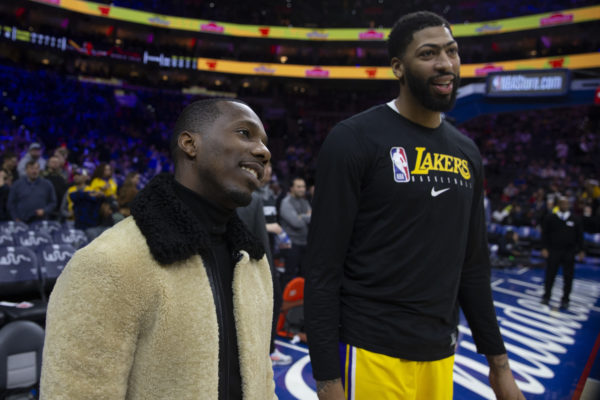
He admitted that representing a white player is challenging; the only white player who has opted to work with him is Bosnian Jusuf Nurkic of the Portland Trail Blazers. Nurkic signed with Paul in 2019.
“It’s very difficult for me to represent a white player,” Paul told The New Yorker. “It just is. Look around. There’s very few. I represent a player from Bosnia. But, again, he’s international. He looks at it different.”
In response to the question, “So white players who are American don’t want a Black agent?” Paul said, “They’ll never say that, but they don’t. I think there’s always going to be that cloud over America.”
While it is noted that Paul thinks that he is in a prime spot to assist Black athletes, he explained that many Black players are actually hesitant to select a Black agent. “If you go back in the history of representation, again, there were very few Black agents,” he said. “There were very few families that had solid family infrastructure. So, you had Grandma really leading the charge, right? Well, who’s Grandma going to listen to? She’s going to listen to head coach. And head coach, in more cases than not, was probably not going to look like the player.”
Paul also addressed his notion that the Black community at large has to change how they see his role as his own position as evolved.
“We’re going from us feeling like, when you come in a room, if you see more Black people in the room, you’re in the wrong room. No, you’re in the right room. That mentality years ago, we have to change that,” he said.
Paul addressed other issues, including some brewing tension between him and Bill Simmons, who runs The Ringer sports website. Simmons was highly disapproving of the choice to air a 2010 live TV event called “The Decision” in which Paul’s client James announced he was leaving his home team Cleveland Cavaliers to play for the Miami Heat.
“I blame the people around him. I blame the lack of a father figure in his life,” Bill Simmons wrote for ESPN. “I blame us for feeding his narcissism to the point that he referred to himself in the third person five times in forty-five minutes. I blame local and national writers (including myself) for apparently not doing a good enough job explaining to athletes like LeBron what sports mean to us, and how it IS a marriage, for better and worse, and that we’re much more attached to these players and teams than they realize.”
Paul disliked the disdain that permeated Simmons’ prose, and said he felt the words were highly targeted. “A lot of that has to do with race, too. He wouldn’t have said that about Larry Bird. He wouldn’t have said that about J.J. Redick. You get what I am saying? ‘The Decision’ ten years ago is the norm today. It’s what everyone wants to do. Kids won’t even decide where they go to college without it being a big production, and Bill Simmons says some s**t like that.”


